

Lead Provider of Environmental Test Chamber


 Posted on
12 06 2026
Posted on
12 06 2026


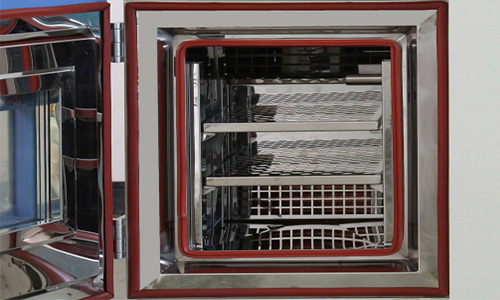
You manage a lab or lead quality control. Space stays tight and budgets stay tight too. You need reliable temperature and humidity testing. At the same time you do not want a giant chamber that takes up half the room. That is where a benchtop temperature humidity test chamber often helps. Pick the wrong model and you may face slow temperature changes. You may also see uneven readings. Or you may waste money on features you never use.
This guide walks through the main decisions one step at a time. It helps lab managers and QC teams skip common problems. It also helps them find equipment that fits their daily work.
Many labs handle smaller batches of parts. Electronics components, sensors, medical devices, or battery cells often do not need a large walk-in room. A compact benchtop unit sits right on the workbench. It saves floor space and still offers tight, accurate control.
These smaller chambers work well when you run many short tests. They also help when you need to set things up fast. You avoid tying up your larger machines for small jobs. They are easier to move around the lab. They are also cheaper to run each day.
Start with the basics. Figure out exactly what you plan to test. How fast do you need the temperature to rise and fall? Which humidity levels matter most for your products?
Write down the usual size and weight of your samples. Here is a useful rule. Keep your total load under 30 percent of the chamber’s inside volume. Pack in too much and the extra thermal mass slows everything down. Accuracy suffers as well.
Think about your industry. Electronics work often needs fast cycling between cold and hot. Battery testing usually requires very steady humidity. Research teams sometimes want wide temperature swings all the way down to -70°C.
Pay attention to these numbers when you compare different models.
Temperature Range: Standard units typically go from -20°C to +150°C. Low-temperature versions reach -40°C, -70°C, or even colder. Only go as low as you really need. Deeper cold costs more and uses more power.
Humidity Range: Most benchtop temperature humidity test chambers cover 20 percent to 98 percent RH. A deviation around ±2.5 percent RH is common and usually good enough.
Chamber Size: 30L to 80L models are popular in many labs. A 50L unit often measures about 320x350x450 mm inside. That size handles small circuit boards, prototypes, or several small parts without trouble.
Ramp Rates: Look for roughly 3°C per minute heating and 1°C per minute cooling. Faster rates sound nice but might be more than you actually need.
One sensor manufacturer I know tested prototypes in a 50L chamber. They kept the load light, under 15 percent capacity. They got steady, repeatable results every cycle. The minute they overloaded it, ramp times doubled and the data started jumping around.
Good chambers hold steady temperatures and humidity levels. You should see temperature fluctuation around ±0.5°C. Overall deviation stays near ±2.0°C. The controller plays a big role here.
These days most units come with a clear color touchscreen. You get programmable profiles. You also get USB or Ethernet ports and built-in data logging. These features let you pull test records easily. They also let you check on runs from across the lab.
Safety features matter too. Look for over-temperature protection, low water alerts, and leakage sensors. A SUS304 stainless steel interior stands up well to condensation. It stays cleaner over the years.
Benchtop units are fairly easy to move. Still check the power requirements first. Most run fine on standard 220V outlets. Make sure you leave room behind for proper airflow. Also leave easy access to the water tank.
Think about noise levels if the chamber will sit close to people working. Also consider what you might need down the road. Some labs start with a simple temperature-only model. They upgrade later when they add full humidity testing.
Advantages of LIB Vibration Test Chamber
Many products face several stresses together. These include temperature swings, humidity, and vibration. A solid vibration test chamber lets you test under conditions that feel closer to real life.
Temperature from -50°C to +150°C with tight ±0.5°C control
Humidity from 30 percent to 98 percent RH (±2.5 percent)
Strong electrodynamic shaker supports up to 500 kg payload
Fast ramp rates up to 5°C/min
Programmable controller with RS232/USB for custom profiles
Spacious 1000 x 1000 x 1000 mm internal workspace
Tough SUS304 stainless steel construction
This setup lets you run environmental stress and mechanical vibration in the same chamber. You move samples around less. You also catch problems that separate tests often miss.
Here is a simple side-by-side look at typical specs for LIB’s benchtop temperature humidity test chambers.
| Model | Capacity | Internal Size (mm) | Temp Range | Humidity | Key Features |
|---|---|---|---|---|---|
| TH-50 | 50L | 320×350×450 | -20°C to +150°C (low temp options to -70°C) | 20%~98% RH | Touchscreen, USB/Ethernet |
| TH-80 | 80L | 400×400×500 | Same as above | 20%~98% RH | Larger shelves, same controls |
These models use reliable mechanical refrigeration. They come with adjustable shelves and a useful cable port for running monitoring wires inside.
Do not choose based only on the cheapest price tag. A low-cost chamber with poor temperature uniformity wastes time on bad tests. At the same time do not go oversized just because it is available. Bigger units can actually slow your ramp rates when the load stays small.
Check calibration options carefully. ISO17025 calibration gives you extra confidence in your readings. And never underestimate after-sales support. Fast spare parts and helpful technical help can save you major headaches later on.
LIB Benchtop Temperature Humidity Test Chamber is designed for laboratories that need dependable climate simulation without giving up valuable floor space. The chamber is available in compact 50L and 80L formats, with internal workspaces such as 320 x 350 x 450 mm and 400 x 400 x 500 mm. These sizes make it suitable for circuit boards, sensors, small battery cells, materials, automotive components, and research samples.
Its temperature range starts from -20°C to +150°C, while low-temperature configurations can reach -40°C, -70°C, or -86°C for more demanding test programs. For humidity testing, the TH series covers 20% to 98% RH, with humidity deviation around ±2.5% RH. This range helps labs simulate common storage, transport, reliability, and product validation conditions.
A programmable color LCD touch screen, USB and Ethernet interfaces, and real-time temperature and humidity display help labs build repeatable profiles, export data, and monitor tests more efficiently. These functions are especially useful for QC teams that need consistent records and traceable test results.
The chamber also uses mechanical compression refrigeration, SUS304 stainless steel inside, adjustable shelves, a cable port, and multiple safety protections. These include over-temperature, over-current, water shortage, dry-combustion, refrigerant high-pressure, and earth leakage protection.
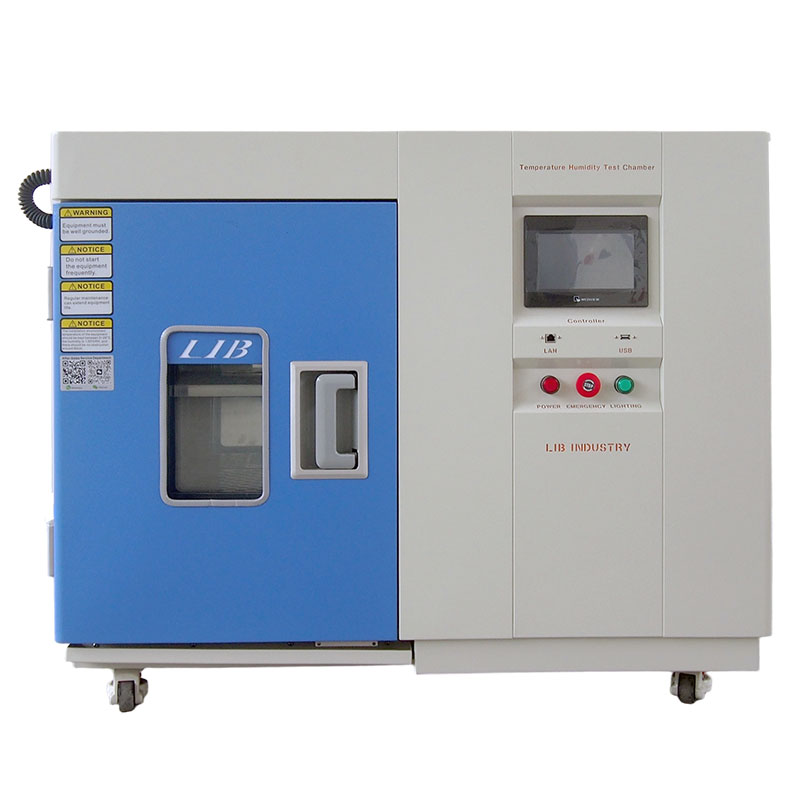
Xi’an LIB Environmental Simulation Industry has built a solid reputation since 2009 as a dependable environmental test chambers supplier. They design and manufacture a wide variety of equipment. This ranges from compact benchtop units all the way to large walk-in chambers.
Their customers work in automotive, electronics, battery development, research labs, and many other fields across more than 40 countries. Thanks to certifications like CE and ISO along with strong after-sales service, LIB delivers practical solutions that match real lab demands. Their team really gets the daily challenges of testing. They help you choose the right equipment for your workflow.
Choosing the right benchtop temperature humidity test chamber comes down to matching the equipment to your actual samples. It also means matching it to your test requirements and lab constraints. Take time to define your temperature and humidity needs. Respect load limits and prioritize reliable control. When you pick thoughtfully you get consistent results. You do this without tying up extra space or budget.
A well-chosen Benchtop Temperature Humidity Test Chamber becomes a dependable daily tool. It supports your quality goals for years.
Most labs start with 50L or 80L models. Keep your samples under 30 percent of the internal volume. This way the chamber can control temperature and humidity effectively without slowing down.
Common ranges run from -20°C to +150°C. Low-temperature options go down to -70°C. Humidity usually covers 20 percent to 98 percent RH. Choose based on your actual product requirements.
Some advanced setups allow combined testing. A separate vibration test chamber can pair with your humidity chamber. This gives more complete stress testing on the same samples.
It is very important. A programmable touchscreen with USB and Ethernet makes it easy to set cycles. It also helps log data and monitor remotely. It saves time and reduces errors.
LIB offers solid build quality, flexible configurations, and good support. Their experience across many industries helps labs get the right Benchtop Temperature Humidity Test Chamber without overpaying for unused features.




 EN
EN


