

Lead Provider of Environmental Test Chamber


 Posted on
24 09 2026


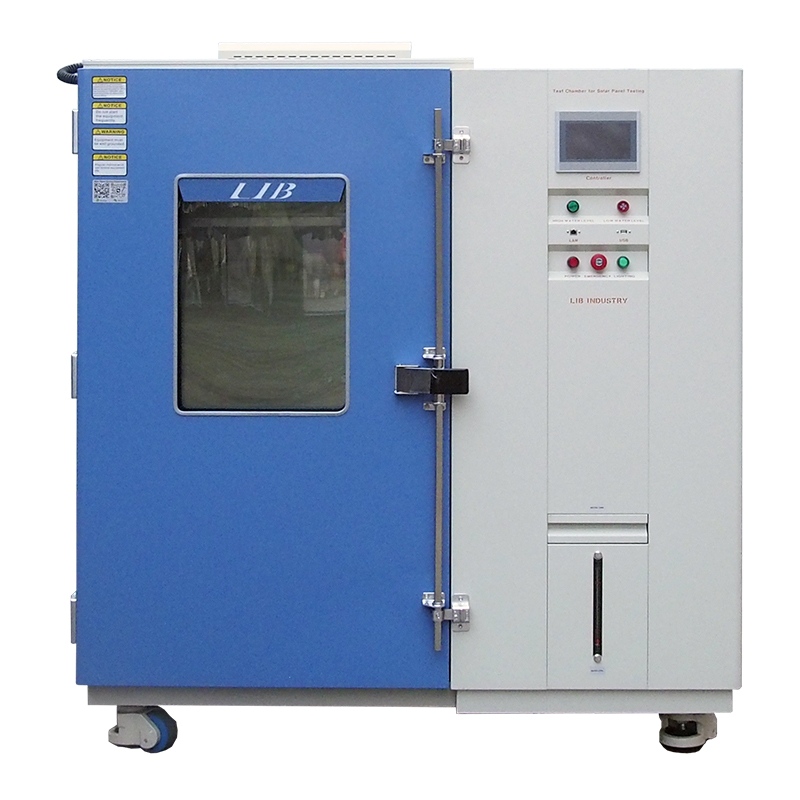
Solar energy markets grow fast these days. More people want photovoltaic modules that last longer, work better, and stand up to tough weather. Makers must show their panels keep steady power after years outside before they can sell worldwide.
IEC 61215 reliability tests stand as key checks for crystalline silicon photovoltaic modules. These tests copy hard weather like temperature swings, wet air, freezing cold, and strong ultraviolet light. The goal is to check how well modules hold up over time.
A PV Solar Panel Environmental Test Chamber gives makers a steady lab space. Here they can copy those weather conditions and spot weak points before big production runs. With good solar panel reliability testing equipment, firms raise product quality, lower the chance of failing certificates, and build more trust with buyers.
Outdoor use over an extended period is essential for solar panels. The effects of actual weather conditions continuously act upon the panels through heat, cold, humidity, and sunlight. Without proper reliability testing, problems such as deterioration of materials, reduction in performance, and body damage can occur post installation.
The IEC 61215 standard provides a definite way to test photovoltaic modules. It enables manufacturers to check whether their panels can withstand repetitive weathering and deliver consistent power output.
A solid IEC 61215 testing chamber lets makers run key reliability checks. These include:
| IEC 61215 Test | Testing Purpose |
|---|---|
| Thermal cycling test | Evaluates module performance under repeated temperature changes |
| Damp heat test | Checks resistance against high temperature and humidity |
| Humidity freeze test | Tests durability under moisture and freezing conditions |
| UV preconditioning test | Evaluates resistance to long-term ultraviolet exposure |
These tests matter a lot for makers who want to offer strong solar products for homes, businesses, and large power plants.

A PV Solar Panel Environmental Test Chamber is special lab gear. It copies different outdoor weather for testing photovoltaic modules.
It differs from plain climate chambers. Solar testing chambers meet the exact needs of PV modules. They control temperature, humidity, and other factors with care. This way they match real working conditions closely.
Common uses cover:
PV module reliability testing
Solar panel durability testing
Material aging evaluation
Product development verification
IEC 61215 certification preparation
In a test, solar modules sit inside the chamber. Programmed weather cycles then run. Engineers later check shifts in power output, body shape, and material state.
A photovoltaic environmental test chamber helps makers find problems like:
Cell cracking
Solder connection failure
Encapsulant degradation
Moisture penetration
Insulation performance reduction
Spotting these in the lab costs far less than finding them after panels go up on roofs or fields.
One hard part in solar making is guessing how PV modules will act after years outside. A solar panel environmental test chamber fixes this. It speeds up weather stress inside a closed space.
Take thermal cycling testing. It can put modules through high and low temperatures again and again. This causes expand and shrink stress much like daily outdoor temperature shifts.
Damp heat testing looks at how moisture hits module materials. This matters especially for solar projects near coasts or in hot wet areas where humidity stays high for long periods.
By copying these conditions, makers can fix product designs before the final certificate stage.
Solar makers often build thousands of modules once design work ends. If reliability problems show up later, the cost of swaps, redesigns, and warranty claims can grow large.
PV module testing equipment helps engineers find weak spots while the product is still in development.
Common failure risks that environmental testing can catch include:
Reduced power output after aging
Corrosion caused by moisture exposure
Material separation between module layers
Decreased insulation performance
Accelerated aging test chambers cut the check time. They create controlled stress that stands for years of outdoor use.
Passing IEC 61215 certification needs steady product quality and exact test steps. A dependable IEC 61215 testing chamber gives makers tighter control over test conditions. It also raises the chance that results can be repeated.
With proper environmental testing, firms can:
Reduce unexpected test failures
Improve product reliability
Shorten development cycles
Support international market expansion
For solar makers, environmental testing is more than a certificate need. It also forms a core part of quality control.

Picking the right solar panel test chamber counts for labs and PV makers. The gear should give exact control, steady running, and match industry test needs.
Important features cover:
Temperature and humidity accuracy shape test results directly. A high-quality environmental chamber should keep steady conditions during long tests.
Key points to check include:
Wide temperature range
Uniform air circulation
Stable humidity control
Continuous monitoring system
Solar modules are bigger than many lab samples. So the testing gear needs enough room inside.
A good PV Solar Panel Environmental Test Chamber should handle:
Full-size photovoltaic modules
Multiple samples testing
Flexible fixture installation
Easy sample loading and unloading
Modern solar testing equipment should offer solid data handling.
Useful functions include:
Real-time temperature monitoring
Humidity recording
Test cycle management
Performance data tracking
These help engineers study test results and write clear reliability reports.
LIB offers PV testing solutions made for solar makers who need solid environmental simulation gear for IEC 61215 reliability tests.
The PV Solar Panel Environmental Test Chamber is built to support photovoltaic module durability checks, product proof, and certificate prep.
Main advantages include:
| Feature | Benefit |
|---|---|
| Temperature and humidity simulation | Recreates different climate conditions for PV reliability testing |
| Large testing space | Supports photovoltaic module testing requirements |
| Accurate environmental control | Improves test repeatability and reliability |
| Long-term operation capability | Suitable for extended aging and durability tests |
| Custom testing solutions | Helps meet different laboratory requirements |
| Professional technical support | Provides assistance during equipment selection and operation |
The chamber can work in:
Solar module manufacturing facilities
Research and development laboratories
Quality inspection centers
Third-party testing laboratories
For solar makers, choosing the right PV Module Testing Equipment helps raise product performance and cut risks during world certificate work.
Xi’an LIB Environmental Simulation Industry is a professional environmental simulation laboratory equipment supplier with its own LIB brand. It covers product design, manufacturing, sales, and service. The company started in 2009. At first it focused on making test chambers while building both local and world markets.
LIB supplies environmental simulation solutions for many industries. It has sent products to customers in 42 countries. The firm has built global distributor ties and set up after-sales support to help international buyers.
As a test chamber maker, LIB focuses on:
Professional environmental simulation technology
Customized testing solutions
Reliable equipment performance
Customer-oriented technical service
With years of work in environmental testing uses, LIB backs companies that need steady and exact testing gear for photovoltaic reliability checks.
Solar makers meet rising demands for product reliability and world certificates. IEC 61215 reliability tests give a clear way to check if PV modules can handle long-term weather stress.
A PV Solar Panel Environmental Test Chamber lets makers copy temperature changes, humidity exposure, freezing conditions, and UV aging inside a controlled lab. By using solid PV module testing equipment, firms can find product weak spots earlier, raise quality control, and lift the success rate of certificate tests.
For makers who want dependable solar panel reliability testing solutions, picking the right environmental test chamber is a smart step for long-term product strength.
A PV Solar Panel Environmental Test Chamber is an apparatus used to reproduce outdoor environments to perform PV module testing. It aids in evaluating solar panel durability, reliability, and performance.
Several environmental evaluations are a part of IEC 61215 reliability testing, including thermal cycle tests, damp heat tests, humidity-freeze tests, and UV preconditioning tests. These tests prove PV modules’ long-term performance.
Solar panel reliability testing aids solar manufacturers in identifying potential defects prior to mass production. It increases product quality, warranties, and helps meet international standards requirements.
A solar panel test chamber simulates harsh environment conditions and provides manufacturers with an opportunity to analyze the durability, electrical stability, and performance of PV modules prior to their production.
Manufacturers need to look at the testing requirements, testing chamber capacity, precision of environmental control, technical support, and supplier experience.




 EN


