

Lead Provider of Environmental Test Chamber


 Posted on
21 05 2026
Posted on
21 05 2026


 Ozone exposure plays a key role in the lasting performance of polymers, elastomers, and coatings in various industrial uses. In aerospace and automotive fields, ozone aging tests help check material strength, safety, and fit for real-world needs. Aerospace faces tough air conditions with much higher ozone at high heights. Automotive parts deal with steady city pollution and physical wear. When you compare ozone aging needs in these areas, you see how surroundings and goals shape test methods and rules.
This section looks at how ozone aging rules vary between aerospace and automotive fields. The gaps come from different work settings and hopes for performance.
Aerospace parts need to handle big temperature changes, UV light, and strong ozone at high levels. This speeds up damage from oxidation. Items like seals, gaskets, and coatings must stay strong in these tough spots for long times. Automotive parts face ongoing ozone at ground level, engine heat, road dirt, and touches from fuel or oil. These cause slow cracks on surfaces and loss of bounce in rubber items such as hoses or tires. So, both areas focus on fighting ozone damage. But the level of harm differs due to the stresses around them.
Each field uses its own set of rules based on the risks in their work. In aerospace, tests often follow ASTM D1149—Standard Test Method for Rubber Deterioration—Cracking in an Ozone Controlled Environment—and MIL specs. These keep tight watch on air factors like moisture and heat. They match flight-like conditions for steady results. For automotive, tests match ISO 1431 and SAE J1401 standards. These check rubber parts in brakes or seals. Test times, ozone levels (usually from 25 to 200 pphm), and how samples are prepped vary. This shows each area’s focus on trust and safety.
These two fields count on exact control in test rooms to copy real work settings well. Next, we explore the main factors in these chambers.
Main factors cover heat, moisture, air flow speed, and ozone amount. In aerospace, they keep moisture low to match dry high-air layers. Steady heat matters a lot. Small changes can shift how polymers break down from oxygen. Automotive tests stress back-and-forth heat shifts from normal to high levels. This copies daily drive cycles where parts grow and shrink with warmth many times.
Strong ozone aging test chambers need even spread of ozone to all samples. This avoids uneven exposure spots. Good seals stop leaks or dirt that might mess up data. New setups add smart tracking tools. They watch air factors live to check against world rules like ISO or ASTM. These choices make sure tests repeat well. That’s key for approving parts in vital uses, such as plane seals or car brake lines.
Ozone resistance ties right to the strength of rubber-like materials in transport fields. It affects how safe and long-lasting they are.
Ozone hits cause tiny cracks on outer layers. Then, oxidation spreads inside the material base. This cuts pulling strength, changes firmness, or makes the whole thing brittle after a while. In aerospace, a break can cause big problems—like air loss in cabins or fluid spills in systems. So, ozone resistance is a must. In cars, worn seals lead to fluid leaks or weaker brakes. This hurts how the vehicle runs.
Better resistance means fewer fixes and swaps over a tool’s life. Aerospace teams want more flight time per part. Automotive makers aim for less repair claims. Both save money this way. Plus, parts that last longer fit green goals. They cut waste from often changing out old ones.
New tech has boosted how exact ozone aging tests are. It uses auto tools and data checks to improve.
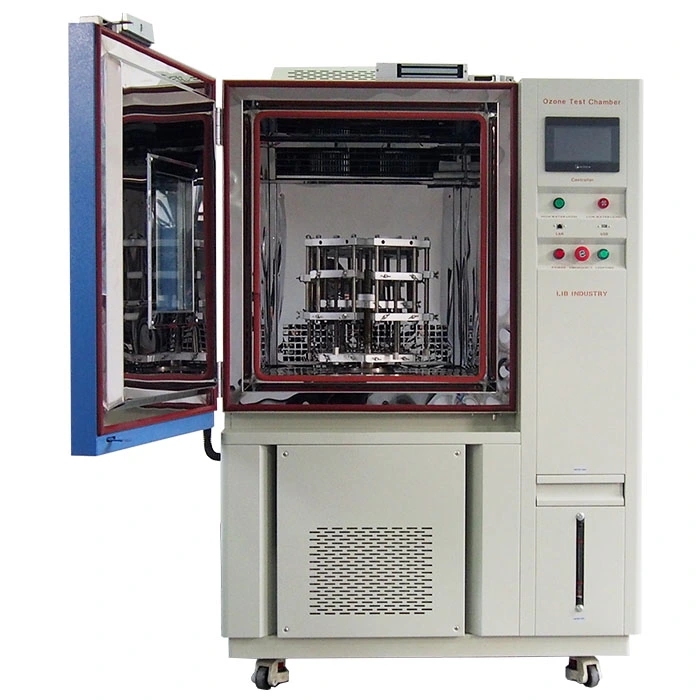
Today’s ozone aging test chambers use smart controls called PLCs. They run full auto cycles that copy hard real-world spots without people stepping in. Auto setup checks cut mistakes from hand work in repeat tests. They keep steady rightness over many sample groups. Better air flow handles even gas spread, no matter the chamber’s load size.
AI-based checks now lead in looking at test results. They spot tiny damage signs that old checks miss. Tools that predict use past data to guess weak spots before they show in real use. This helps builders tweak mixes ahead of time. They find the best mix of cost and long life before launch.
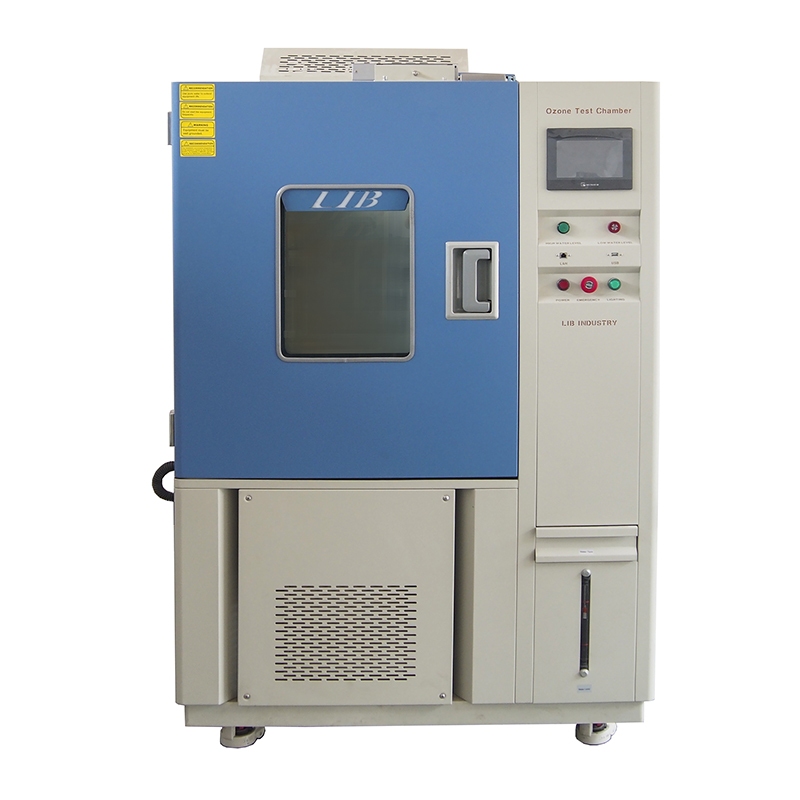
The LIB Ozone Aging Test Chamber is engineered to provide precise and reliable simulation of ozone exposure for aerospace, automotive, electronics, and polymer materials. It ensures accurate reproduction of real-world conditions to evaluate material durability, optimize formulations, and support regulatory compliance.
Key Advantages:
Precise Ozone Control: Adjustable ozone concentration to simulate low to high environmental exposure.
Temperature and Humidity Regulation: Independent control of chamber temperature and moisture to replicate diverse conditions.
Uniform Exposure: Advanced air circulation system ensures even ozone distribution across all samples.
Automation and Data Monitoring: PLC-controlled cycles, real-time monitoring, and data logging for repeatable results.
Safety Features: Sealed structure with exhaust and filtration systems to protect operators and maintain test stability.
Compliance with International Standards: Meets ISO 1431, ASTM D1149, IEC 60068-2-48, and other relevant testing regulations.
Flexible Chamber Sizes: Options from benchtop to large walk-in chambers for multiple samples or larger components.
Technical Specifications Table:
| Parameter | Specification |
|---|---|
| Ozone Concentration Control | Adjustable (pphm level) |
| Temperature Range | Typically ambient to +70℃ (customizable) |
| Humidity Range | 30% – 90% RH |
| Test Modes | Continuous, cyclic, programmable automated cycles |
| Air Circulation | Uniform distribution with adjustable flow |
| Safety & Filtration | Sealed chamber, exhaust filtration, operator protection |
| Compliance Standards | ISO 1431, ASTM D1149, IEC 60068-2-48 |
| Chamber Options | Benchtop, floor-standing, walk-in |
LIB’s ozone aging chambers provide a robust solution for accelerated material testing, helping industries ensure safety, longevity, and compliance in high-performance applications.
Xi’an LIB Environmental Simulation Industry makes top-notch gear for mimicking surroundings. This includes exact ozone aging test chambers for aerospace, automotive, electronics, and plastic studies. Their items stress tight grip on heat, moisture, air evenness, and ozone levels. They meet world rules like ISO 1431, ASTM D1149, IEC 60068-2-48, and more. These setups aid labs doing fast material checks. They also help factory checks for steady long-term trust tests.
Looking across fields shows aerospace and automotive both lean on ozone aging test chambers. But they chase different goals. Aerospace stresses safe lasting in wild air settings. Automotive focuses on toughness in changing ground stresses. Test factors—like moisture ranges or heat cycles—fit each area’s air exposure. This keeps simulations true to life. Ongoing new ideas in auto links and AI checks lift result trust. They shorten check times too. In the end, this builds strong plans for upkeep in world making groups.
An ozone aging test chamber copies long material contact with set ozone amounts under given heat-moisture levels. It checks how well parts fight cracks or rust that harm rubber items over time.
Aerospace checks run at low moisture to match dry high spots. They use strict controls from MIL rules. Automotive ways often add heat-cool repeats. These match shifting road heat that car parts face each day.
Xi’an LIB gives fresh simulation setups with exact digital controls. They ensure steady results that match world certs like ISO or ASTM. This makes them great for study spots and factory checks needing even accuracy in repeated ozone aging tests.




 EN
EN


