

Lead Provider of Environmental Test Chamber


 Posted on
23 10 2026


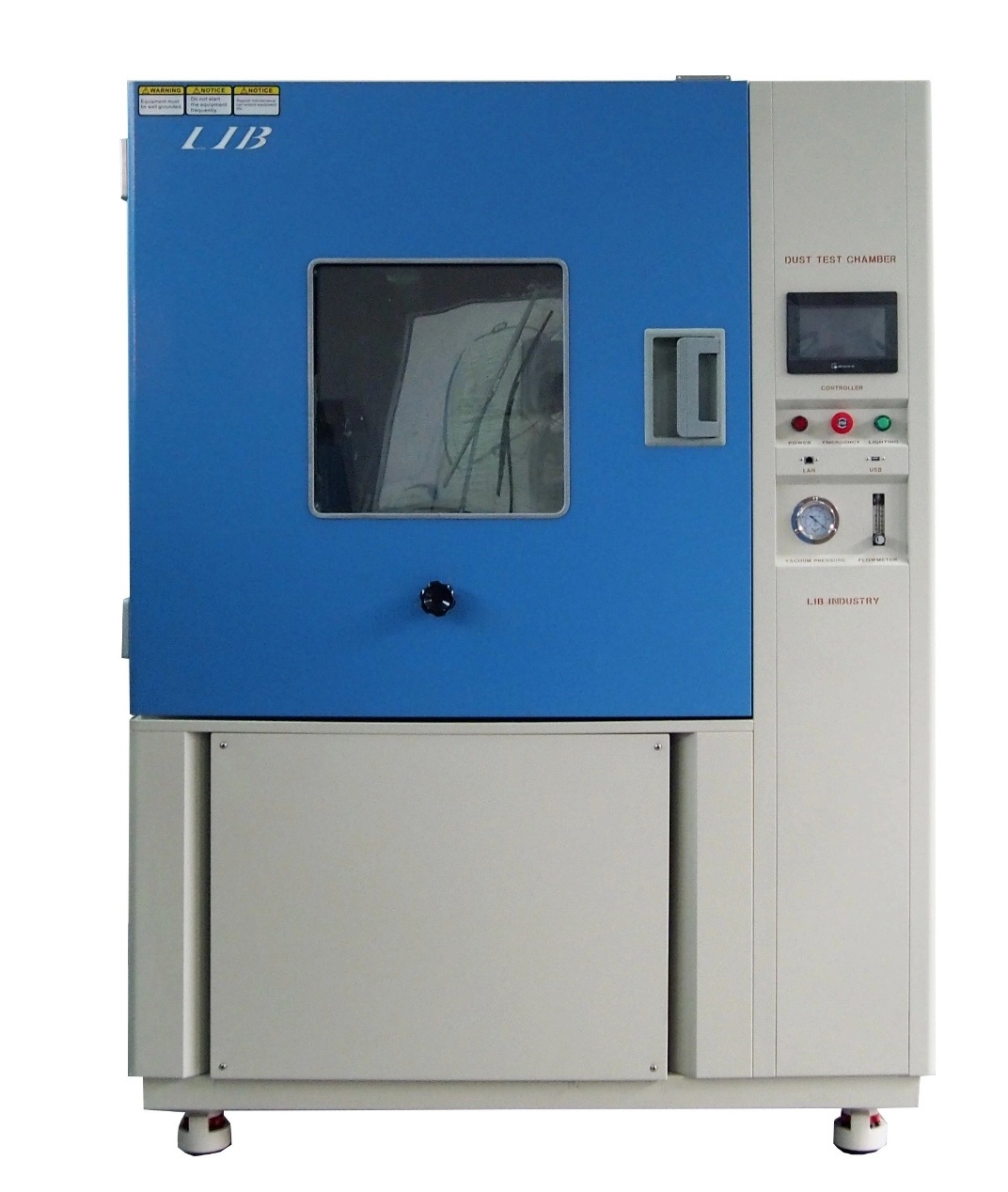
Environmental Chamber FAT and SAT Acceptance Checklist
An environmental chamber FAT and SAT plan defines what the supplier must prove before shipment and what must be checked again after installation. FAT covers construction, controls, safety, programmed profiles and agreed performance at the factory. SAT confirms the installed chamber works with the buyer’s utilities, room conditions, sample wiring and operating team. Both need written limits, measured evidence and named owners for open items.
A demonstration is not an acceptance test. Watching a chamber reach one temperature says little about uniformity, recovery, alarms or data export. If the purchase order says only “machine operates normally,” the buyer and supplier can interpret success differently. A signed protocol removes that ambiguity before shipment costs make correction harder.
The protocol should trace each test to the user requirement or technical specification. It should also state exclusions. A standard temperature-humidity chamber may be able to run a customer profile, yet powered samples could add more heat than the refrigeration system was sized to remove. That condition belongs in the agreed load section, not in a discussion after delivery.
The published range for a LIB temperature humidity test chamber helps define candidate setpoints, capacities and utilities for the acceptance plan.
Issue the FAT protocol early enough for the supplier to prepare sensors, fixtures and sample loads. Identify the exact chamber, serial number, software revision and drawing set. List the test setpoints, dwell times, ramp requirements, humidity points and heat load. If the buyer will witness remotely, agree on camera views and live data access.
Confirm internal dimensions, door clearance, cable ports, shelves, drain connections, power rating and materials against the approved drawings. Review electrical diagrams, refrigeration information, component lists, calibration certificates, controller manuals and recommended spare parts. A missing drawing is easier to fix before the crate leaves the factory.
Trigger alarms rather than reading their names from the screen. Check over-temperature protection, water shortage, refrigerant pressure protection, over-current protection and earth leakage functions when applicable. Confirm what happens after power loss: whether the program resumes, stops safely or waits for operator action. Record the selected behaviour.
Choose points that represent the intended work. A chamber specified from -70°C to 150°C does not need every possible point during FAT, but a buyer using -40°C, 85°C and 85% RH should see evidence near those conditions. Run long enough for the chamber and agreed load to stabilize. Capture raw sensor data, controller data and timestamps.
|
FAT item |
Evidence to collect |
Typical acceptance question |
|---|---|---|
|
Temperature limits |
Reference sensor trace |
Did every point remain in the agreed band? |
|
Humidity control |
Temperature and RH trace |
Was control stable after equilibrium? |
|
Ramp performance |
Start, end and transition time |
Was rate defined for air or product? |
|
Uniformity |
Mapped sensor results |
Was the test empty or loaded? |
|
Alarms |
Triggered event and response |
Did the chamber enter the agreed safe state? |
|
Data export |
Opened file with timestamps |
Can the buyer use the file without conversion? |
State whether a ramp rate is measured from chamber air, a control sensor or the product. The numbers can differ sharply. Also test recovery after a defined door opening if operators will load samples during a cycle. A chamber may meet the programmed air ramp but take much longer to recover around a large metal assembly.
Use calibrated reference sensors at agreed locations. For a small cabinet, corners and centre may be enough; a walk-in room or dense rack needs more positions. Record the usable test space, not the volume directly against walls and ducts. If the supplier’s catalogue tolerance is based on an empty chamber, say so in the report.
Large products may require a walk-in and large-specimen test solution with site utilities, floor loading and airflow included in the acceptance scope.
How to Close FAT Without Losing Control of Open Items
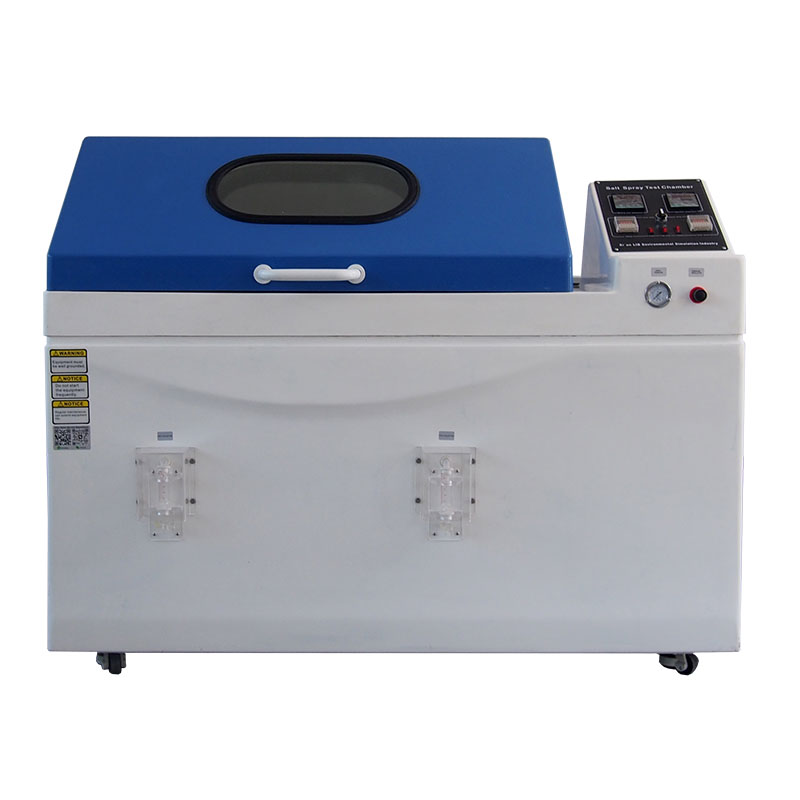
Salt Fog Mist Test Chamber
FAT does not have to be perfect to permit shipment, but every deviation needs a written disposition. Classify items that block shipment, items that must be corrected before SAT and minor documentation actions. Give each item an owner and date. Photographs and revised drawings should be attached to the same record, not scattered across email threads.
Back up the controller program and configuration before packing. Record software versions and alarm settings. If the chamber is disassembled for transport, mark connections and photograph the final factory arrangement. These records shorten installation and help determine whether a later problem began during shipment or commissioning.
SAT begins after the chamber is connected to the final power, water, drainage, ventilation and network. Room temperature, humidity and clearance can affect performance. Verify supply voltage, phase sequence, protective earth, water quality and drain flow before running a demanding profile. For water-cooled equipment, record inlet temperature, pressure and flow.
Inspect shipping condition, level the chamber, confirm door sealing and check that ports were reassembled correctly. Run the controls, lighting, fans, pumps, humidifier and safety circuits. Confirm network access and user permissions on the buyer’s system. A controller that exported data at the factory may be blocked by site security settings.
SAT does not need to copy every FAT step. Repeat the conditions most sensitive to utilities and installation: low temperature, high humidity, ramp performance, drainage and the buyer’s main profile. Use the buyer’s actual sample fixture or heat load when it is available. Compare the trace with FAT and investigate material differences.
Operator training should use the installed chamber and an approved test profile. Ask each operator to create a program, start and stop it safely, respond to an alarm, export data, refill or check water systems, and perform routine cleaning. Record attendance and keep the training file with the equipment history.
The final handover package should include signed FAT and SAT reports, calibration records, manuals, drawings, software backups, spare-parts lists, maintenance schedules and resolved punch-list evidence. Store one controlled copy outside the chamber computer. A failed drive should not erase the only configuration record.
LIB describes installation, calibration, spare-parts and training support on its test chamber service page. Buyers can turn those service items into named handover deliverables in the purchase specification.
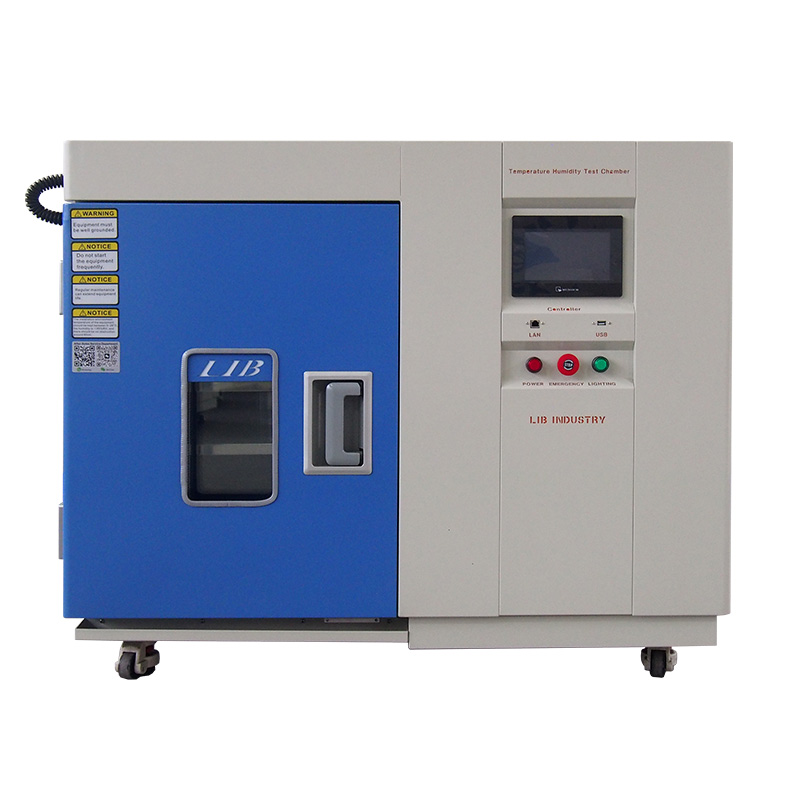
Benchtop Climate Test Chamber
LIB supplies standard and custom environmental chambers with programmable controllers, USB or Ethernet functions on many product lines, stainless-steel interiors and safety protection suited to the selected chamber type. The product range covers temperature, humidity, thermal cycling, corrosion, weathering and ingress testing. This makes it possible to align acceptance checks with the stress being controlled rather than using one generic checklist for every machine.
For procurement, the strongest request is a sample-based requirement. Provide dimensions, mass, heat output, cable routing, target profile and applicable standard. The supplier can then confirm chamber capacity, port locations, fixtures and utilities before drawings are approved. That early exchange is more useful than asking for the lowest temperature and largest volume alone.
A review of LIB’s environmental test chamber product centre can help buyers identify which acceptance items change between climatic, corrosion, weathering and IP equipment.
One final procurement detail deserves attention: define the acceptance file format. A screenshot of the controller is useful for a quick witness, but it is weak evidence for later analysis. Ask for raw time-stamped data, sensor identification, units and the approved program file. Open the export during FAT and again during SAT. This catches delimiter, timestamp or permission problems while the supplier and site team are present. It also gives the laboratory a clean data chain from purchase acceptance to routine testing.
Xi’an LIB Environmental Simulation Industry is an environmental test chamber supplier and exporter. According to the company website, LIB began exporting test chambers in 2009 and provides standard and customized equipment as well as test solutions. Its stated support covers consultation, quotation, transport, installation, calibration, training and after-sales service.
A useful environmental chamber FAT and SAT process proves requirements with measured evidence. Define the protocol before manufacture, test safety and performance at the factory, control every open item, then repeat installation-sensitive checks at the final site. Signed reports, raw data and configuration backups protect both parties and give the laboratory a clean starting record for future calibration and maintenance.
These questions clarify the practical boundary between factory testing, site testing and later qualification work.
FAT is performed before shipment at the supplier’s factory. SAT is performed after installation with the buyer’s utilities, room conditions and operating setup.
Witnessing is useful for customized systems, critical profiles and large investments. Remote witnessing can work when live readings, camera views and exported data are agreed in advance.
No. SAT confirms installed function and agreed performance. Calibration establishes measurement traceability, while process validation shows that the user’s actual method produces acceptable results.
Keep signed FAT and SAT records, calibration certificates, manuals, drawings, software backups, training records, spare-parts information and evidence that every punch-list item was closed.




 EN


