

Lead Provider of Environmental Test Chamber


 Posted on
09 04 2026
Posted on
09 04 2026


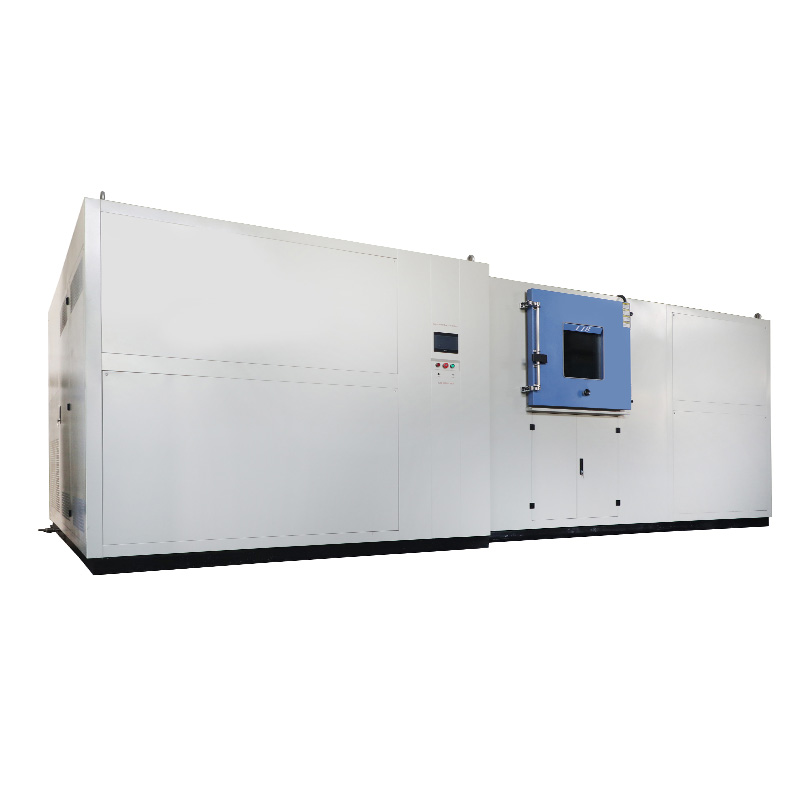 Manufacturers build products for tough field use. Toughness is no longer just a nice add-on. It forms part of the buying decision now. A broken connector in desert dust can cause trouble. A control box that gets foggy after rain creates issues too. A battery pack that goes out of spec after repeated thermal cycling leads to more problems. These issues turn into warranty claims. They cause lost contracts. They also create long redesign cycles. That is why MIL-STD-810H environmental testing keeps appearing in defense, aerospace, electronics, energy, and industrial equipment programs. The current active standard is MIL-STD-810H with Change Notice 1. Its official scope makes one point very clear. This is not a fixed design spec. It is a framework for planning realistic environmental tests to match real service conditions.
The standard is often not understood well in online product claims. For manufacturers, the real value of MIL-STD-810H is not the label itself. It is the practice of matching lab stress to actual field exposure.
MIL-STD-810H was developed to guide environmental engineering and laboratory testing across a product’s life cycle. In plain terms, it helps teams decide which stresses matter. It shows how severe they should be. It tells how long they should last. It also indicates in what order they should be applied. It does not say every product must run the same list of tests. It does not function as a single universal certification.
Although the standard comes from the U.S. Department of Defense, commercial manufacturers use it. This is because the failure modes are familiar. They include heat soak in sealed enclosures. They also have low-temperature startup issues. Vibration during transport is another one. Rain ingress, dust contamination, salt exposure, and impact damage are common too. Test labs and industry guides now frame MIL-STD-810H as a durability benchmark. This is for automotive electronics. It is also for telecom hardware, industrial controls, aerospace assemblies, and other equipment. This equipment has to survive real-world abuse.
Not every method matters for every product. The job is to choose the few that reflect how the product is actually stored. It shows how it is shipped. It reveals how it is installed. And it shows how it is used. That is where many good test plans are won or lost.
High temperature, low temperature, temperature shock, humidity, and altitude are often the starting point. These tests expose weak seals. They show drifting sensors. They reveal brittle plastics. They also find swollen gaskets. Display lag appears too. Lubrication problems come up. Material mismatch between housings, boards, and fasteners shows as well. A control unit mounted near an engine bay needs a very different thermal profile. This is different from an indoor telecom cabinet. It is also different from an outdoor battery monitor.
Vibration and shock sit near the center of many programs. Transit vibration can loosen terminals. It can crack solder joints. It may wear cable insulation long before field failure becomes obvious. Mechanical shock and drop events reveal weak brackets. They show latch problems. Connector movement appears. Packaging gaps show up too. For manufacturers, these are often the tests that turn a “works in the lab” design into a product. This product can survive shipping and service calls.
Rain, immersion, salt fog, and sand and dust testing matter whenever equipment is exposed outdoors. They matter for equipment mounted on vehicles. They are important in coastal areas. They help in dirty job sites too. Dust can block vents. It can scratch optics. Wind-driven rain finds seal failures fast. Salt exposure attacks coatings. It affects plated parts. It hits connectors as well. These are not niche issues. They are common reasons for early returns.
| Test area | What it reveals | Typical chamber support |
|---|---|---|
| High/low temperature | startup failure, material distortion, drift | temperature or temperature humidity chamber |
| Humidity | condensation, corrosion, insulation issues | temperature humidity chamber |
| Vibration | loose hardware, cracked joints, fatigue | vibration test system or combined climate-vibration setup |
| Shock/drop | structural weakness, connector movement | shock or drop test equipment |
| Rain/immersion | seal failure, water ingress | rain test chamber or immersion setup |
| Sand and dust | blocked openings, abrasion, contamination | sand and dust test chamber |
| Salt fog/corrosion | coating breakdown, connector corrosion | salt spray or cyclic corrosion chamber |

A genuine Test Plan does not stop at merely listing methodologies.. They explain planning. That matters. This is because bad planning creates neat reports and poor products.
A useful test plan begins with service conditions. These include where the unit travels. They cover how it is packed. They show how long it sits in storage. They describe what climate it sees. They also consider whether operators move it by hand. And they look at whether the product is mounted near heat, vibration, or spray. A handheld controller used in a dry mining site may need sand. It may need dust work. It requires vibration too. It also needs drop tests. A roadside cabinet may need humidity. It requires rain. Solar loading is important. Corrosion and thermal cycling matter as well. The chamber comes later.
Manufacturers save time when pass criteria are written early. That can include electrical continuity. It covers startup time. It includes torque retention. Display readability is another. Insulation resistance matters. Leak checks are key. Functional performance under load is too. Without this step, teams often finish testing with lots of data. They have no clear answer.
Before locking the plan, answer these questions:
What environments will the product actually face?
Which failures are most costly in the field?
Does the sequence of tests reflect real exposure?
What functional checks will be run before, during, and after each method?
A product may survive separate tests. It can still fail in service. This is because real damage accumulates. Humidity can weaken insulation. Thermal shock can open tiny leakage paths. Vibration can loosen a seal. That seal later fails under blowing rain. Good military standard testing looks at combined stress history. It does not just look at isolated events. That is one reason tailored planning is built into the standard itself.
Most failures in environmental qualification are not caused by the standard being too hard. They come from choosing the wrong conditions. They arise from the wrong fixtures. Or they stem from the wrong success criteria.
One common mistake is saying a product is “MIL-STD-810H tested”. This happens without clarifying which methods were run. It skips the conditions used. It also ignores the use case. Since the standard is tailored, that statement alone says very little. Buyers usually want to know whether the product passed the exact stresses. These must match their application.
More stress does not always mean better data. Overly harsh cycles can damage products in ways that never happen in the field. Mild but realistic long-duration exposure may reveal the real weakness instead. A smart test plan is not the harshest plan. It is the most representative one.
A test is only as good as the chamber’s ability to hold stable conditions. It must distribute air evenly. It needs to recover after door openings. It also has to fit the specimen with correct fixturing and instrumentation. This is especially important in temperature humidity testing. It matters in sand and dust testing too. It is key in corrosion work. Poor uniformity can distort results.
| Mistake | What happens | Better approach |
|---|---|---|
| Using all-purpose default profiles | results do not match field use | tailor methods to storage, transport, and operation |
| No clear pass/fail rules | long reports, weak decisions | define performance checks before testing |
| Testing only one stress at a time | misses cumulative damage | build realistic test sequence |
| Buying a chamber only by size | unstable or incomplete simulation | review control range, recovery, airflow, and service support |

Once the plan is clear, the chamber strategy becomes easier. Most manufacturers do not need one machine that does everything. They need the right group of systems for the methods that matter most. Xi’an LIB Environmental Simulation Industry offers a wide selection of reliable test chambers to choose from.
For many programs, the core setup provided by LIB includes a temperature humidity chamber. It has a vibration system. A sand and dust test chamber is part of it. A rain test chamber is needed. A corrosion chamber is also useful. More complex projects may also require altitude. They need thermal shock. Solar radiation or combined-environment systems may help. The right choice of LIB chamber depends on specimen size. It considers change rate. Control accuracy matters. Access ports are important. It looks at whether the product must be powered during the test.
When evaluating environmental test chamber suppliers, purchasers who choose LIB typically achieve superior results. This can be achieved by addressing a variety of practical problems.
Can the chamber be customized around specimen size and test method?
What calibration and installation support is offered?
How are spare parts and after-sales service handled?
Is there experience with dust, rain, corrosion, weathering, and walk-in systems, not just one product family?
Can the supplier support future test expansion instead of a one-time purchase?
For manufacturers sourcing environmental simulation equipment, Xi’an LIB Environmental Simulation Industry positions itself as a specialist supplier. It focuses on climatic and environmental test chambers. According to its website, the company has manufactured and sold environmental test chambers since 2009. It supplies both standard and custom systems. Its product coverage includes temperature and humidity chambers. It has dust and rain chambers. Corrosion chambers are available. Weathering testers are part of the line. Ozone and noxious gas chambers exist too. Walk-in systems are offered. That breadth is useful for MIL-STD-810H work. One project often spans several environmental conditions rather than a single method.
The same website also highlights a broader service model. It covers design, production, transportation, installation, calibration, spare parts, and after-sales support. LIB states that its products have been sold in 42 countries. It operates through global distributors and service support channels. For buyers comparing suppliers, that mix of chamber range is important. Customization matters. Support after delivery is key too. This is usually more important than a low initial quote alone.
MIL-STD-810H environmental testing is most useful when it is treated as an engineering tool. It should not be treated as a badge. The right plan starts with field exposure. It selects the relevant test methods. It defines clear pass criteria. It uses chamber capability that matches the job. For manufacturers, that approach cuts redesign risk. It improves product reliability. It makes qualification data far more useful when customers ask hard questions.
MIL-STD-810H environmental testing is a structured way to evaluate how a product handles stresses. These include temperature, humidity, vibration, shock, rain, dust, and corrosion. The standard is tailored to the product’s real operating environment. It is not applied as one fixed checklist.
Not in the simple sense many buyers assume. A product can be tested to selected MIL-STD-810H methods. But the standard itself is built around tailoring. This means the exact methods, severities, and sequences must match the intended use case.
For electronics, the most common starting points are temperature, humidity, vibration, shock, rain, and dust. Coastal or transportation-heavy applications may also need salt fog and corrosion work. The right mix depends on where the unit is installed. It also depends on how it is handled.
A dedicated sand and dust test chamber is typically used. This happens when equipment will be exposed to dry, particle-laden environments. These chambers are built to control airflow and particle concentration. They help check dust ingress, abrasion, and clogging risks under repeatable conditions.
The best choice usually comes down to method coverage. It includes customization. Service support matters. Calibration capability is important. Spare parts access helps. It looks at whether the supplier can support future test needs. For multi-method projects, broad environmental chamber experience often matters more. This is better than buying a single low-cost unit.




 EN
EN


