

Lead Provider of Environmental Test Chamber


 Posted on
25 06 2026
Posted on
25 06 2026


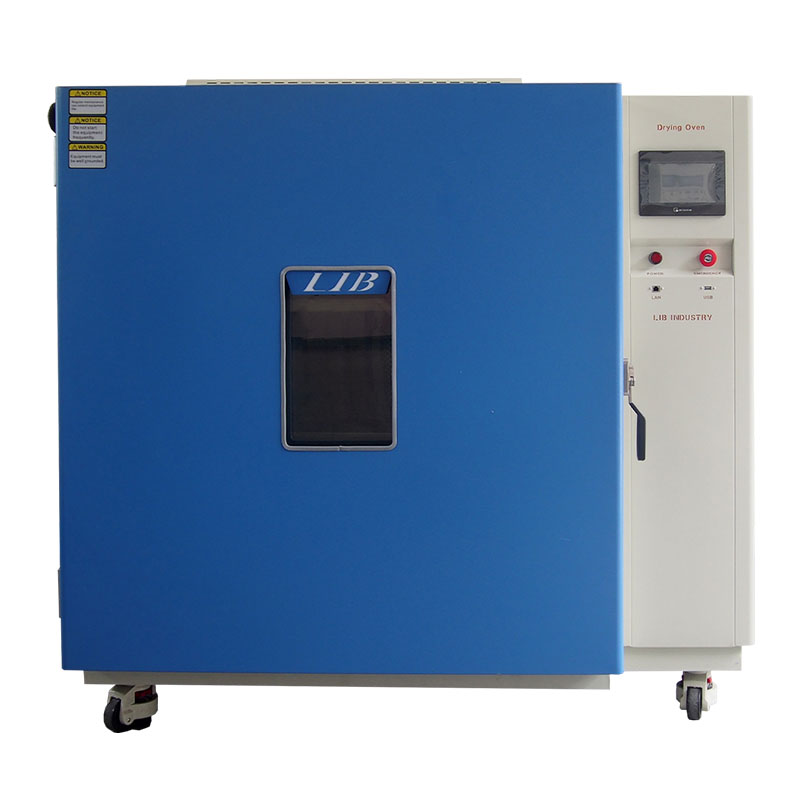
Whether you are equipping manufacturing plants, quality labs or R&D centers, the field of thermal processing is running at a fast pace. At the heart of it all are the industrial drying ovens. From the drying of coatings for electronic components to the curing of materials for new energy applications, they are in constant use on production lines.
The next few years will bring many opportunities for buyers and distributors if they only know when to grab them. We explain the market, the opportunities and how to prepare yourself as a clever purchasing manager.
Here are the numbers. The global energy-efficient industrial drying oven segment reached an estimated $1.48 billion in 2025. Analysts forecast this segment to reach $2.167 billion by 2032 with a CAGR of 5.6% till then.
Beyond lab drying equipment, the rest of the industrial drying market is growing very well in many areas. For example, the new energy, advanced materials and electronics manufacturing markets are growing overall at around 5.8% CAGR. However, one area is growing so fast, it is clearly a high margin area for B2B companies to consider entering – lithium battery vacuum drying ovens – valued at approximately $245.26m in 2025, growing at 9.25% CAGR.
Several real-world shifts are driving this expansion.
New Energy Boom The battery makers and solar panel component manufacturers are drying the various electrode materials and the separators for the batteries in these new energy systems. One large facility can easily need dozens of high-capacity ovens to run continuously 24/7.
With electronics and semiconductor growth occurring in part due to miniaturization, tighter and tighter tolerances must be met. It is especially important in circuit board and display panel production for example to have an oven that is able to maintain temperature consistently and avoid hot spots in order to minimize defect rates.
Advanced Materials Research Companies working on composites, ceramics, and specialty coatings projects. Our programmable drying cycles enable precise temperature control from 250°C up to 800°C for a variety of applications in different industries.
A mid-sized auto supplier I spoke to last year doubled the size of their drying capacity as they were winning more EV contracts. They found out the hard way that their older paint ovens could not hold to the tighter controls of humidity and temperature that their customers required.
The Asia-Pacific region leads the world in both production and consumption of renewable energy and advanced electronics. Countries such as China are supported by their governments to develop new energy projects as well as electronics manufacturing base. Many international buyers source their required equipment from China and surrounding countries due to mature supply chain and competitive price.
North America Growth here comes from reshoring efforts and stricter quality standards. Labs and plants want ovens with better data logging and compliance features for FDA, automotive, and aerospace certifications.
The Europe Focus region is very focused on energy efficiency and sustainability in cooking ovens, in terms of key performance indicators such as low power consumption and excellent insulation. From a manufacturing perspective there is increasing focus towards net zero manufacturing and therefore the use of modern equipment is highly beneficial.
Emerging Markets Percentage growth is higher in Southeast Asia and parts of the Middle East as local manufacturing takes hold. Distributors should build relationships now in these markets to secure early entry points.
Smart buyers don’t just buy industrial drying ovens based on the temperature range. Here are some key factors to consider.
Temperature uniformity across the chamber
Energy consumption per cycle
Programmable controls with good data export options
Build quality of internal shelving and seals
Available safety features for high-temperature operation
For volume buyers, lead time is just as important. As demand continues to climb, suppliers with strong production volumes will have the upper hand.
In addition to drying many of the laboratories are also testing vibration, especially in the field of electronics as well as in the automotive sector. The vibration test chambers of LIB are a robust test solution for combined environment testing.
Main Strengths:
True integration of temperature, humidity, and vibration stress
Robust construction that stands up to daily use in demanding labs
Flexible setup options for different test standards
Typical Technical Parameters:
Temperature range: -70°C to +180°C
Humidity control: 10% to 98% RH
Vibration types: Sine, random, and classical shock
Table sizes: Available from compact benchtop models to larger floor-standing units
Controller features: Touchscreen interface with USB and network connectivity for easy data management
Safety systems: Multiple over-temperature protections and emergency stops
Our environmental chambers allow you to run any test profile in one chamber instead of moving from machine to machine. This saves a lot of time when running Quals in a tight time frame.
Xi’an LIB Environmental Simulation Industry is a highly reputable company and Environmental Test Chambers supplier. The company offers a wide variety of environmental simulation equipment and supplies many industrial drying ovens for various applications. These drying ovens are supplied with a temperature range from 250°C up to 500°C. In some cases even higher temperatures of 800°C are required and can be reached with some of the models offered by Xi’an LIB Environmental Simulation Industry. LIB Environmental Simulation focuses on high quality test equipment for environmental tests and offers good technical support as well as different kinds of services for the customers all over the world.
The industrial drying oven market through 2032 is a good opportunity for B2B buyers who are moving. Growth in new energy, in the electronics industry and in new materials will require drying technology. Also differences between regions offer potential for a targeted strategy. Industrial buyers have to take a broader view than just price at the start: also the total performance, energy efficiency and service and support over the years have to meet their needs. It is wise to check your present equipment, to talk with suppliers about coming projects and to take the necessary capabilities. The market will grow.
Standard industrial drying ovens are generally available for temperature ranges from 250°C up to 500°C. There are however also higher temperature drying ovens available up to 800°C, to dry special materials at high temperatures.
New energy, electronics manufacturing, and advanced materials lead the way, with lithium battery production showing particularly strong demand.
It is very important. In case of poor temperature uniformity it is not possible to obtain reproducible results. This is a problem in many industries. Especially in electronics and in the drying of battery components, higher reject rates are the consequence of non uniform drying.
In most cases yes. The lower operating cost over several years can be enough to offset the extra cost of the more energy-efficient model, especially if the facility is running 24/7.
Focus on integration capabilities, temperature range, vibration profiles, and controller features that make programming and data collection straightforward.




 EN
EN


