

Lead Provider of Environmental Test Chamber


 Posted on
24 07 2026
Posted on
24 07 2026


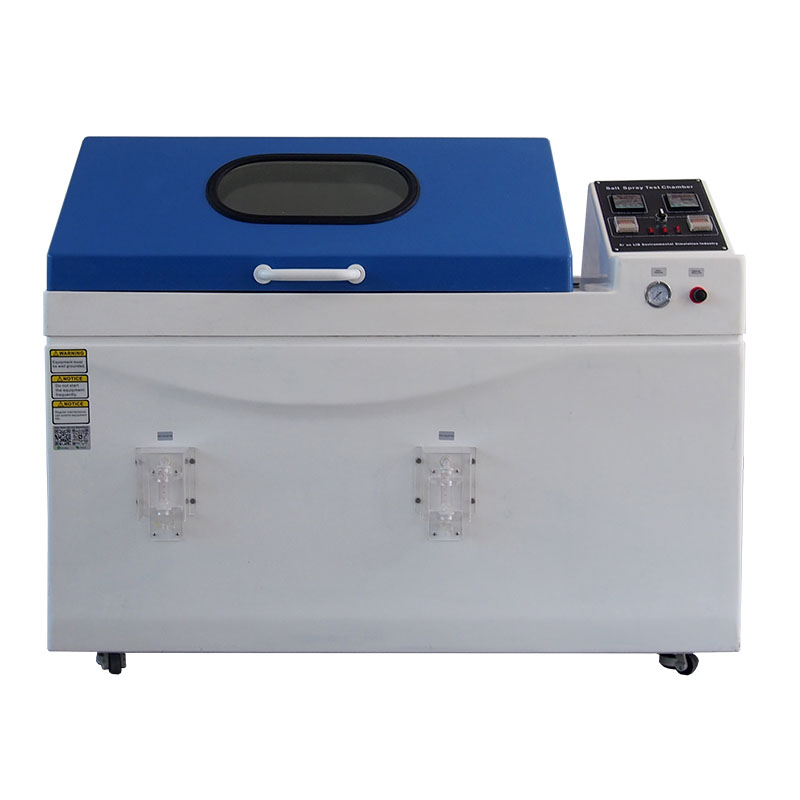
A salt spray chamber is often bought because a customer or standard asks for corrosion resistance data. The next lab question is practical. Can one salt spray chamber run NSS, AASS, and CASS, or does each method need a separate cabinet?
Yes. One salt fog test chamber can run all three salt spray test methods if it is built for NSS, AASS, and CASS testing and cleaned correctly. The risk is not fog generation. The real risk is cross contamination, especially when copper and acid residues from CASS testing remain before an NSS test.
These three methods look similar from outside the chamber. Samples sit in a closed workroom, salt solution becomes fine fog, and corrosion is checked after exposure. Inside the process, NSS, AASS, and CASS create different chemical conditions.
NSS means neutral salt spray test. It is widely used for coated steel parts, fasteners, aluminum parts, zinc plating, painted panels, and general quality control. The solution is usually sodium chloride, and the collected solution stays near neutral pH. For many factories, an NSS test chamber is the first corrosion test unit.
AASS means acetic acid salt spray test. It uses an acidified salt solution. The lower pH makes the environment more aggressive than NSS, so it is often used for decorative coatings, plated parts, anodized aluminum, and coated components that need faster screening.
CASS means copper accelerated acetic acid salt spray test. It adds copper chloride to the acidified salt solution. This makes CASS much harsher than NSS. It is often selected for high-corrosion-risk plated parts, decorative trim, marine hardware, and products exposed to salty, acidic, or industrial air.
| Method | Typical environment | Common use | Main chamber concern |
| NSS | Neutral salt fog | Coatings, metals, fasteners | Stable fog and pH |
| AASS | Acidified salt fog | Plating, anodized aluminum | Acid residue |
| CASS | Acidified fog with copper | Severe coating checks | Copper chloride contamination |
A multi-method salt spray chamber can run NSS, AASS, and CASS when the spray system, chamber material, controller, collectors, reservoir, and cleaning access are suitable for acidic and copper-containing solutions. The chamber should support stable temperature control, spray deposition, continuous or periodic spray, and easy draining.
For a small lab that runs NSS most of the week and CASS once or twice a month, one chamber can be practical. It saves floor space and keeps corrosion testing in one workflow. The lab still needs a strict cleaning SOP. Without it, the next NSS run may show faster corrosion, not because the sample is weak, but because the chamber still carries acid or copper traces.
For a busy coating lab that runs CASS every day and also performs supplier approval NSS tests, separate chambers may be safer. It cuts cleaning downtime and lowers the chance of a disputed report.
Running several salt spray test methods in one corrosion test chamber is a controlled practice. Small operating details decide whether the result is useful or questionable.
Cross contamination in salt spray testing happens when residues from one method carry into the next method. CASS is the highest-risk case. Copper chloride can stay in the reservoir, drain line, spray tower, nozzles, sample racks, fog collectors, or chamber corners. If the next run is NSS, those residues may change the corrosion rate.
A common example is a zinc-plated bracket that usually passes 96 hours of NSS. After a CASS run, the same part may show early white rust or red rust. The part may not have changed. The chamber environment changed.
NSS depends on a neutral collected solution. AASS and CASS depend on acidic conditions. If acid remains after cleaning, the pH of an NSS run may drift. A lab may spend days retesting samples or questioning coating batches when the real issue is chamber cleanliness.
Fine fog depends on clean spray nozzles and steady air flow. Salt crystals, copper traces, and old solution can block or distort the fog pattern. Uneven fog gives uneven corrosion. One sample position may fail badly while another looks almost untouched.
Cleaning is the key to using one salt spray chamber for NSS, AASS, and CASS testing. A quick rinse is not enough after CASS.
Recommended workflow:
Drain the old solution fully from the reservoir, pipes, and drain line.
Remove samples, racks, funnels, collectors, and measuring cylinders.
Rinse the chamber interior with clean water, including corners and lid edges.
Clean the spray tower, atomizer, quartz nozzles, sample holders, and fog collectors.
Run a water rinse cycle before adding a new solution.
Check the collected solution pH before the next formal NSS test.
Record cleaning time, operator name, pH, fallout rate, and abnormal deposits.
For high-value samples such as EV battery enclosures, outdoor connectors, marine locks, aluminum housings, or plated fasteners, a short blank run is useful after CASS. If the blank collection shows pH drift or visible residue, the chamber is not ready for NSS.
Before buying a salt spray chamber for NSS, AASS, and CASS, look past chamber size. A larger cabinet does not automatically give better data. Control, cleaning, safety, and traceability matter more.
Check these points before placing an order:
Support for ISO 9227, ASTM B117, IEC 60068-2-11, and related corrosion test needs.
Corrosion-resistant interior material for salt fog and acidic solution.
Fine and even fog generation through reliable nozzles and atomizer design.
Fog collectors and measuring cylinders for checking deposition rate.
Easy access for cleaning spray parts, reservoir, racks, and drain lines.
Programmable controller for switching between NSS, AASS, and CASS settings.
Data logging for temperature, spray time, pH records, and audit files.
Safety features for water shortage, over-temperature, overcurrent, and leakage protection.
For labs that want one chamber for several salt spray test methods, LIB Salt Fog Mist Test Chamber is designed around stable fog, program control, and practical maintenance. It supports NSS, AASS, and CASS testing for automotive parts, electronics, coatings, marine hardware, and fasteners.
| Feature | Value for the user |
| Supported methods | NSS, AASS, and CASS corrosion testing |
| Temperature range | Ambient to 60°C |
| Humidity range | 95% to 98% RH |
| Temperature fluctuation | ±0.5°C |
| Test time | 1 to 999 hours, settable |
| Spray deposition | 1–2 mL/80 cm²·h |
| Spray type | Continuous or periodic spray |
| Spray system | Atomizer tower and spray nozzles for fine, even fog |
| Controller | PID microcomputer control with programmable operation |
| Standard parts | Sample holder, spray nozzle, fog collectors, measuring cylinder |
| Safety devices | Over-temperature, water shortage, overcurrent, leakage protection |
The chamber also supports real-time data logging, USB or Ethernet export, and multilingual touchscreen operation. These functions help link each batch with temperature, spray time, pH notes, and cleaning checks. Automatic water management and dry-burn protection reduce workload during long exposure tests.
Xi’an LIB Environmental Simulation Industry is a China-based manufacturer and exporter of environmental test chambers. Its product range covers temperature and humidity chambers, corrosion test chambers, weathering testers, dust and rain chambers, ozone test chambers, noxious gas chambers, drying ovens, and walk-in test rooms.
The company supplies standard and custom test chambers for climate, corrosion, weathering, IP, and special environmental tests. For international buyers, many projects start with a sample size, a standard, a test time, a power supply, and a report requirement.
LIB’s service system includes specification support, quotation support, machine supply, transportation, installation, calibration, spare parts, training, warranty service, and after-sales follow-up. That mix is useful for end users, laboratories, dealers, and tender projects.
One salt spray chamber can run NSS, AASS, and CASS when the equipment and lab process match the risk. NSS is sensitive to acid and copper residue. AASS and CASS need stronger cleaning discipline. If CASS is frequent, a dedicated chamber may be better. If space and budget favor one unit, choose a salt fog test chamber with stable spray control, cleanable parts, programmable settings, data export, and a written cleaning workflow.
Yes. NSS, AASS, and CASS can be run in the same salt spray chamber if the chamber is built for multiple salt spray test methods and cleaned carefully between tests.
The biggest risk is copper chloride contamination. Residue from CASS testing can affect the next NSS test and cause faster corrosion or invalid salt spray test results.
Drain the solution, rinse the reservoir and chamber interior, clean the spray tower and nozzles, wash collectors and sample racks, then verify pH and spray deposition.
Key features include stable fog distribution, pH control support, cleanable nozzles, corrosion-resistant materials, programmable operation, data logging, safety protection, and standard compliance.




 EN
EN


