

Lead Provider of Environmental Test Chamber


 Posted on
02 07 2026
Posted on
02 07 2026


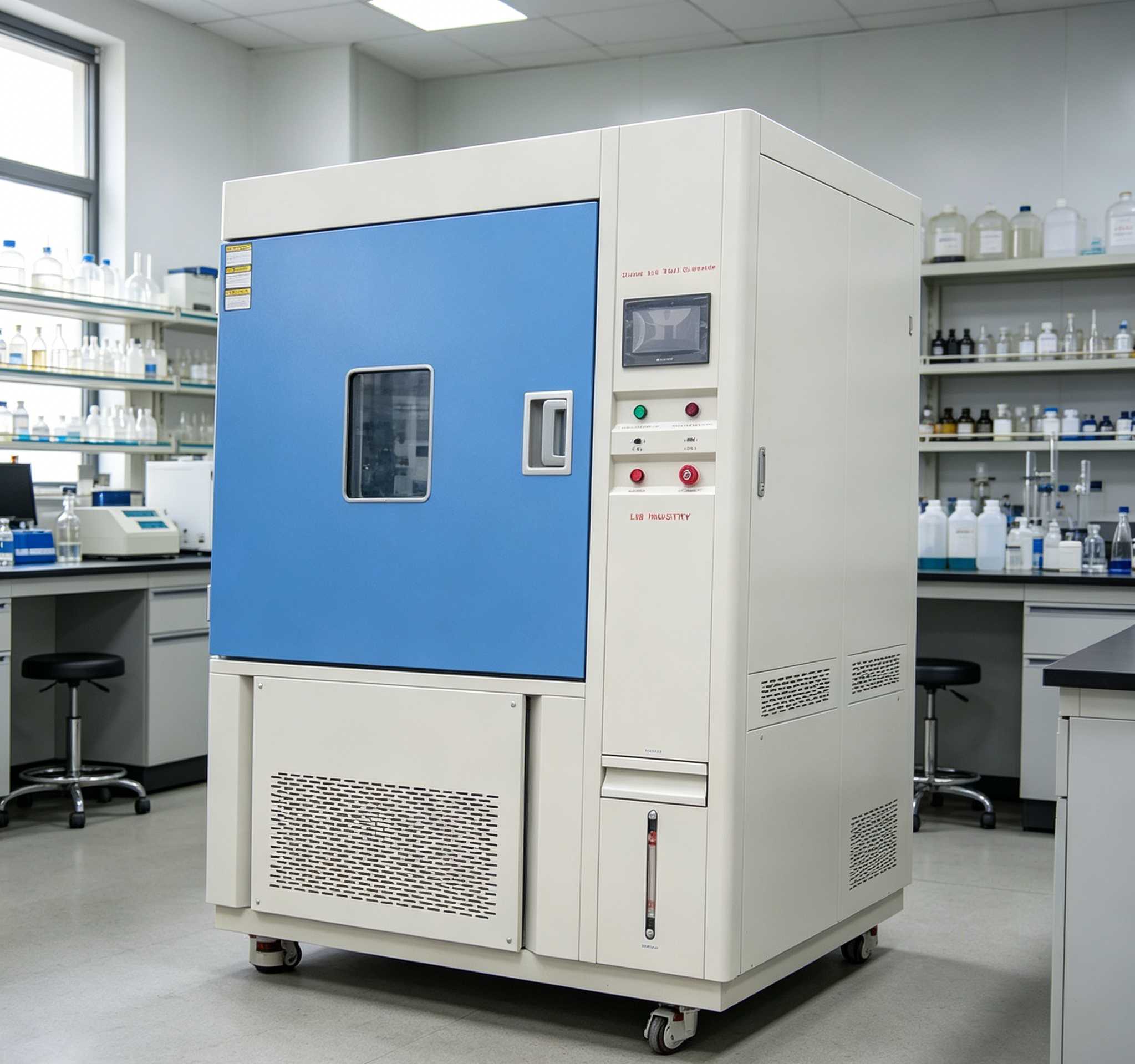
A Car maker / Auto part supplier faces a huge challenge in ensuring that parts he supplies look good and are rugged enough to last for years. Parts are subjected to harsh weather conditions of Sun, Rain and temperature variations. Faded Bumper, Cracked Dashboard or Brittle Seals can cost a lot of money in form of Warranty Claims and also can lead to huge brand damage. Hence Xenon Arc test Chamber is used by major Automotive players for validation of their parts.
For quality engineers, materials managers and procurement people who work with exterior plastics and textiles, it can be highly valuable to understand the different chambers of a test chamber in order to conduct the right tests with the right supplier.
A Modern Vehicle is a Plastic and Composite Rich Environment. Modern vehicle bumpers, exterior trim components, mirror housing, convertible tops, interior trim components and even vehicle seat fabrics are formulated to last for many years. All of these components are subjected to exposure to UV, heat and moisture and in all cases it is desired that little if any degradation occur as a result of such exposure. Testing these types of outdoor specimens can take too long to provide meaningful data in a timely manner.
Xenon arc testing condenses months or even years of outdoor exposure down to days or weeks. That’s why automotive OEMs use it: it simulates the full extent of sunlight, including all the critical UV wavelengths that cause a material to deteriorate.
Unlike older carbon arc or fluorescent UV testers, xenon arc lamps produce a light spectrum very close to natural sunlight. This allows accurate prediction of color fading, gloss loss, cracking, and mechanical property changes.
In North America the bulk of automotive testing is conducted in accordance with two main standards.
SAE J2412 — Focuses on interior materials and components
SAE J2527 — Covers exterior materials and coatings
In order to validate materials most major OEMs require testing in xenon arc chambers according to these protocols. Often the results of these tests have to be available in order to receive production part approval.
In early testing of a new textured plastic, a Tier 1 supplier discovered by xenon arc testing that after 18 months in Arizona desert conditions the surface would have unacceptable gloss loss. They were able to alter the formulation prior to launch to avoid what could have been a very expensive warranty issue.
In a standard Xenon Arc test chamber samples are mounted on rotating test racks and are subjected to a controlled cycle of light, moisture and temperature. The modern test chamber can be precisely programmed to meet specific requirements.
Irradiance levels (usually 0.35–0.55 W/m² at 340nm)
Black panel temperature
Relative humidity
Spray cycles (for simulating rain and dew)
The duration of the tests are typically between 500 and 3000 hours depending on the material used and on the OEM requirements. The results of the tests are measured by color measurement (Delta E), by the gloss retention, by the tensile strength and by the visual test for cracking and chalking.
Exterior Plastics: Bumpers, grilles, and body panels made of exterior plastics must maintain their appearance and function over time. Testing of exterior stabilizers and pigments by Xenon arc exposure.
Textiles and Soft Trim: As textiles and soft trim items such as convertible tops, seat trim and headliners are subject to possible fading and fiber deterioration, testing helps in selecting appropriate dyes and chemical treatments to ensure color and texture remains consistent over time.
Coatings and Paints: Evaluation of clear coats and colored paints for chalking, cracking and adhesion loss. Xenon arc hours are required by many OEMs for approval of new paint systems.
For reliable environmental testing, it is common to combine weathering with mechanical stress. For testing road vibration, in combination with environmental influences, LIB offers the Vibration Test Chamber.
Key Advantages and Specifications:
Wide Frequency Range: 5 Hz to 3000 Hz, covering most automotive vibration profiles
High Acceleration: Up to 100g depending on model and payload
Large Displacement: 50–100 mm peak-to-peak for realistic simulation
Flexible Payload Capacity: Models supporting 100 kg to over 1000 kg
Precise Control: Advanced digital controllers with ±0.5 dB accuracy
Integration Capability: Can be combined with temperature/humidity chambers for combined stress testing
User-Friendly Operation: Intuitive software with programmable profiles and data logging
These test chambers are valued by engineers because they allow for the discovery of failures in components made of plastic, wiring harnesses and other interior components before they are sent into the field. By running vibration tests simultaneously with environmental tests, engineers are able to dramatically reduce the time required for development.
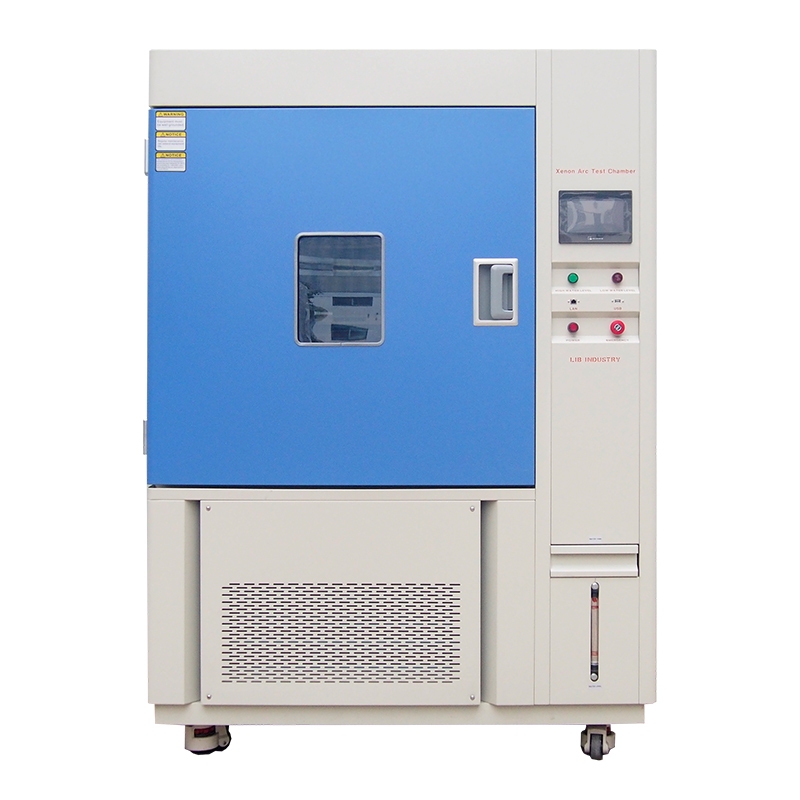
Xi’an LIB Environmental Simulation Industry is one of well-know environmental test chambers suppliers, which design and manufacture a wide range of environmental test chambers, including temperature, humidity test chambers, corrosion test chambers, weathering test chambers, and vibration test machines.
LIB chambers are known for their solid construction, their excellent measuring results and practical solutions. For years LIB serves the automotive, the electronics as well as the material sector. Many of our customers come back to us, because our chambers are running reliable for a long time and are easy to use and to service.
The use of Xenon Arc Accelerated Weathering Test Chambers have become the norm in testing automotive exterior plastic and textile parts. The technology enables fast, reproducible and relevant test results allowing automotive Original Equipment Manufacturers and suppliers to test and develop suitable materials for the outdoor use. By simulating several years of exterior usage in a test chamber, potential failures can be detected in the early development stage, saving time and cost for possible field failures.
Investing in Xenon Arc testing capability is a necessity for Quality and Procurement departments to remain competitive. Xenon Arc testing is required by many OEMs and by having the correct testing strategy in place, Quality and warranty costs can be protected whilst ensuring confidence in your supply chain.
SAE J2412 is primarily used for interior materials, while SAE J2527 focuses on exterior parts and coatings. Both use xenon arc testing but with different cycle parameters.
Typical validation test duration for automotive materials are between 500 hours and 3000 hours or even more, depending on the material and the OEM’s specific requirements.
It provides much faster results (weeks instead of years) with better repeatability and controlled conditions that allow direct comparison between materials.
Yes. Many laboratories conduct combined environmental and mechanical stress tests on automotive parts.
Look for accurate irradiance control, reliable temperature and humidity systems, good uniformity across the test area, and strong after-sales support. Compliance with SAE J2412/J2527 standards is also important for automotive work.




 EN
EN


