

Lead Provider of Environmental Test Chamber


 Posted on
16 10 2026


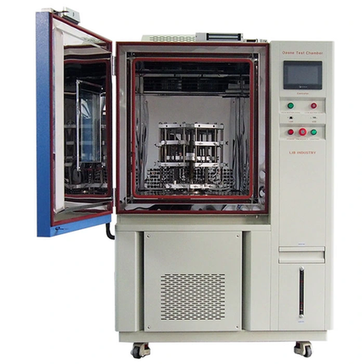
ALT: Ozone Aging Test for Rubber Seals A Practical Guide
Ozone aging test for rubber seals is a controlled way to expose elastomers to a known ozone concentration while temperature, airflow, strain and exposure time are recorded. The aim is practical: find surface cracks before a seal leaks in service. A good test plan links the chamber result to the seal geometry, compound, storage history and intended climate.
A parked vehicle, outdoor cabinet or compressed hose can look sound during a short inspection and still fail after repeated ozone exposure. Ozone attacks unsaturated bonds near the surface. Under tensile strain, tiny fissures open perpendicular to the stress direction. Once a crack reaches a sealing lip, pressure cycling can turn a cosmetic mark into a leak path. This is why a rubber ozone test should examine both unstrained coupons and parts held at their working extension.
For chamber selection, review the ozone test chamber specifications before fixing the test plan.
ISO 1431 and ASTM D1149 are common references for ozone resistance. They define specimen preparation, ozone exposure, temperature, strain and crack assessment, but they do not replace engineering judgement. A seal used at 25% compression may need a fixture that reproduces that deformation; a flat strip test alone can miss edge effects and mould lines.
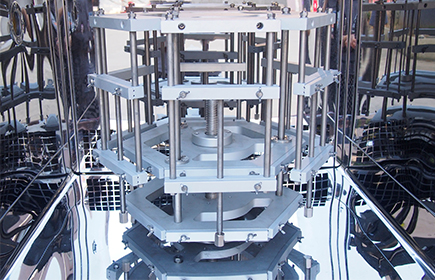
Static exposure holds the specimen at a fixed elongation while it sits in the ozone atmosphere. It is useful for ranking compounds and checking crack initiation. Dynamic exposure adds repeated flexing or extension. It better represents a door seal, bellows or moving shaft seal, but it also demands a fixture that does not rub the sample or disturb chamber airflow.
Alt:Ozone Generator
Start with a written profile. Record the target ozone concentration, temperature, specimen dimensions, strain, exposure duration and inspection intervals. Keep the same conditioning time for every batch; moisture and antioxidant migration can change early results.
Cut specimens from production-representative material, not a hand-mixed laboratory sheet alone. Mark the mould direction and record thickness at several points. For finished seals, retain a small section of the actual lip, joint and surface finish. Photograph each sample before exposure so later crack comparisons are not based on memory.
Use a calibrated gauge or fixture to set extension. Leave enough clearance for air to circulate around every face. Samples touching one another create local ozone depletion and make the row nearest the inlet appear worse. A fixture map in the test record prevents accidental changes between runs.
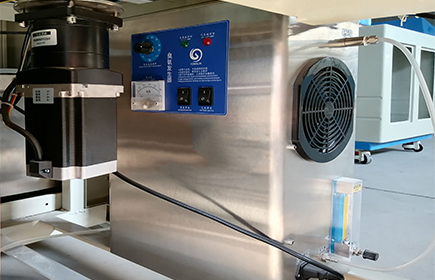
Allow temperature and ozone readings to settle before the exposure clock starts. Check the sensor against a reference or recent calibration record. If the concentration oscillates, investigate generator output, sealing, airflow and sensor placement instead of averaging away the problem.
Use a fixed observation schedule, such as 2, 4, 8, 24 and 48 hours, when screening a new compound. Remove only the samples assigned to that interval. Use the same magnification and lighting; oblique light makes fine cracks easier to spot. Record crack count, length, direction and whether the crack opens under light flexing.
A pass/fail crack rating is only the first filter. Measure compression set, leakage, force change or electrical insulation where relevant. A seal may show shallow cracks yet maintain pressure, while a single crack at a moulded corner can cause immediate leakage. Test evidence should therefore identify location and function, not just a grade.
Ozone resistance is not determined by material type alone. The final result is also influenced by how the seal is installed, stretched and exposed during service. For example, a seal placed near outdoor equipment may experience repeated temperature changes and mechanical movement, which can accelerate surface damage. Recording these conditions during testing helps engineers understand whether laboratory observations match actual use scenarios. A practical evaluation should therefore combine ozone exposure data with product design, installation requirements and expected operating environment.
• Using a flat coupon when the product fails at a sharp moulded corner.
• Starting the timer before ozone and temperature have stabilized.
• Packing specimens too tightly and creating uneven airflow.
• Comparing batches with different storage age or antioxidant history.
• Treating a visual crack score as proof of field life without a functional check.
Alt:Air Circulation System
For laboratories that need repeatable rubber ozone aging tests, a chamber should be specified around the measurement task, not only its nominal volume. LIB environmental test chambers are configured for controlled ozone exposure, temperature stability, programmable runs and specimen fixtures suited to static or dynamic work.
The right configuration also leaves room for future methods. A lab may begin with flat coupons, then add dynamic fixtures for bellows or cable jackets. Discussing sample geometry and inspection method early helps prevent a chamber that meets a brochure number but cannot hold the parts used in production.
See the corrosion test solutions for related environmental test planning.
Xi’an LIB Environmental Simulation Industry is an environmental test chamber supplier serving laboratories, manufacturers and quality teams. The company designs and exports climatic and corrosion test equipment, with engineering support for chamber selection, installation, operation and service. Its role is to provide a controlled platform and practical technical guidance so customers can build repeatable evidence for material and product decisions.
A useful ozone aging test does more than expose rubber to gas. It reproduces strain, temperature, airflow and inspection conditions that matter to the finished seal, then links visible cracking to leakage or mechanical performance. A written profile, stable chamber control and consistent photographs make results easier to compare across compounds and production lots.
It exposes rubber seals or representative specimens to controlled ozone and temperature to reveal cracking and loss of sealing performance.
Yes. Static or dynamic strain often reveals cracks that a relaxed coupon will not show.
Stable ozone concentration, temperature control, uniform airflow, suitable fixtures and traceable data logging are the key features.
Screening runs may use intervals from a few hours to several days; the duration should follow the applicable standard and the failure rate needed for the decision.




 EN


