

Lead Provider of Environmental Test Chamber


 Posted on
03 07 2026
Posted on
03 07 2026


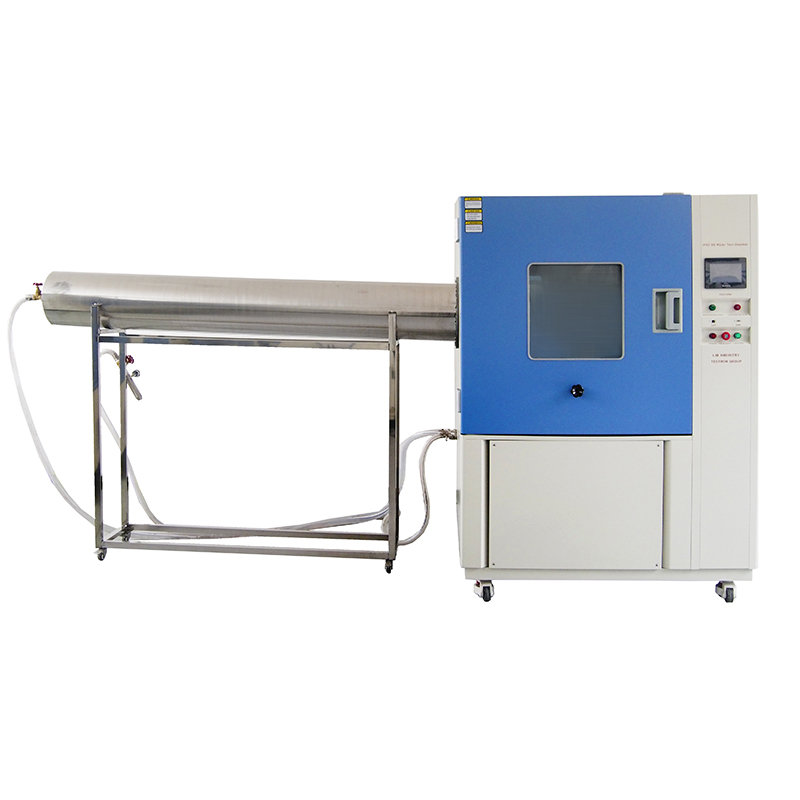
The IPX5 IPX6 Water Jetting Test Chamber simulates a heavy rain storm or hose down to test your product’s water resistance. When designing or certifying products such as outdoor electronics, automotive parts or industrial equipment water resistance is rarely an option. An incorrect IP rating can result in product failures during certification, product recalls and unhappy customers. The test chamber will help you determine the true level of protection your product offers against water.
This guide explains the key differences between the waterproof ratings of IPX5 and IPX6, explains when you would use each of these ratings and helps you choose the right rating for your application.
The IP Code (Ingress Protection) rating defines a product’s protection against dust and water. The letter “X” in IPX5 or IPX6 ratings means that a product was specifically tested for its water resistance. These two ratings are probably the most often requested for products used outdoors and in harsh environments.
There is a common misconception that the higher the class number the better the product protection. This is generally true but there is a large increase in test severity between IPX5 and IPX6 designs which in turn can lead to large design changes.
For the IPX5 test water is sprayed from a 6.3 mm nozzle at a flow rate of approximately 12.5 liters per minute. The water spray is applied from a distance of 3 meters to the product under test. The test is continued for at least 3 minutes during which time the product is regularly turned to test all surfaces.
This rating protects against water such as from a hose spray or heavy rain. Typical applications are outdoor lighting, such as bollards, wall lights or spotlights, parking lot lighting, weather enclosures for electrical equipment such as weather enclosures for outdoor security cameras. When testing a range of solar streetlights for IPX5 the manufacturer found that water was leaking from one of the seams that appeared to have been sealed. However with a few minor modifications to the manufacturing process this was cured before production started.
Typical Applications for IPX5:
Outdoor LED lighting
Garden and landscaping equipment
Some marine deck accessories
Roadside traffic control boxes
IPX6 is a very stringent test. Utilizing a 12.5mm spray nozzle delivering 100 liters/minute of water at a distance of 3 meters it simulates a powerful jet of water from a firehose or a high powered cleaning hose.
As for products that are certified to IPX6, they are capable of withstanding a far more severe degree of water exposure than the previous ratings. You will typically see this rating referred to when referring to products that are installed on ships, offshore platforms and heavy industry. Typically construction plant.
After some portable power stations for construction sites failed during a high-pressure wash of some high-pressure equipment the manufacturer of this product enhanced the protection of his units from IPX5 to IPX6 to prevent failures in the field with subsequent warranty claims.
| Parameter | IPX5 | IPX6 |
|---|---|---|
| Nozzle Diameter | 6.3 mm | 12.5 mm |
| Flow Rate | 12.5 L/min | 100 L/min |
| Test Duration | Minimum 3 minutes | Minimum 3 minutes |
| Water Pressure | Moderate | High pressure |
| Protection Level | Spraying water | Powerful water jets |
| Common Use Cases | General outdoor exposure | Heavy rain, hose-down, marine |
| Design Impact | Moderate sealing requirements | Stronger seals and gaskets needed |
The flow rate is significant difference between the two ratings. IPX6 flows around 7.65 liters/second as opposed to IPX1’s 0.969 liters/second, thus more robust sealing is typically required for products designed to IPX6.
Consider these practical questions:
Will the product face regular high-pressure cleaning?
Is it installed near the ocean or in areas with powerful storms?
Does your target market (Europe, North America, marine) require higher ratings?
How much extra cost are you willing to accept for stronger protection?
Many companies start with IPX5 for cost-sensitive products and move to IPX6 when entering stricter markets or when field failure rates become unacceptable.
In addition to verifying water resistance, a large number of products need to be tested in various environmental conditions. In these cases, in addition to actual mechanical loads, LIB’s Vibration Test Chamber can simulate various conditions of use to check how a product withstands.
Key Advantages of LIB Vibration Test Chamber:
Wide frequency range (typically 5–3000 Hz) suitable for most industry standards
High payload capacity with excellent table uniformity
Precise control of acceleration, velocity, and displacement
Integration capability with temperature and humidity chambers
Advanced digital controllers with easy-to-use software
Typical Specifications:
| Parameter | Performance Range |
|---|---|
| Frequency Range | 5 Hz – 3000 Hz |
| Max Acceleration | Up to 100g (depending on model) |
| Max Displacement | 50–100 mm (peak-to-peak) |
| Payload Capacity | 100 kg – 1000+ kg models available |
| Table Size Options | Multiple sizes for different products |
| Control Accuracy | ±0.5 dB typical |
Engineers particularly value how these chambers can identify mechanical failures before they occur in the field thereby saving time and avoiding costly warranty repair issues.
Xi’an LIB Environmental Simulation Industry is a leading supplier of environmental test chambers, offering a range of high quality testing equipment with many years of experience and expertise. Their range of temperature, humidity, corrosion, water penetration and vibration test chambers are designed for the most demanding of quality control applications.
Our test chambers are built to last with accurate test results. Chambers are easy to use and our laboratory is one of the choices of many test laboratories and manufacturers world wide. The technical support provided by LIB is good during the whole life time of the test equipment. LIB’s down-to-earth and practical approach helps to provide the best solution to customers from all kind of industries who need environmental test simulation.
Knowing the differences between the IPX5 and IPX6 Water Jetting Test Chamber requirements will assist you with your product design and certification requirements for outdoor use. IPX5 is suitable for most outdoor applications, however IPX6 offers extra margin for more aggressive applications. Choosing the correct rating will prevent costly failures and assist in meeting market certification requirements.
Take time to match the test standard to your actual usage environment and future market plans. The right testing strategy protects both your reputation and your bottom line.
IPX5 uses moderate water jets (12.5 L/min), while IPX6 blasts much stronger jets (100 L/min), simulating high-pressure hose exposure.
When very powerful water jets, regular high pressure cleaning or maritime exposure could be an issue for your product. Choose IPX6 for extra robustness in these type of situations.
No. Since IPX6 is more severe than IPX5, passing IPX6 automatically means the product also passes IPX5.
Vibration testing reveals mechanical weaknesses that could compromise water seals during transport or real-world use, giving a more complete reliability picture.
First accurate control of flow, then correct nozzles, reliable pressure control and safe operation. Also important: reliable operation in the lab on a daily basis.




 EN
EN


