

Lead Provider of Environmental Test Chamber


 Posted on
18 06 2026
Posted on
18 06 2026


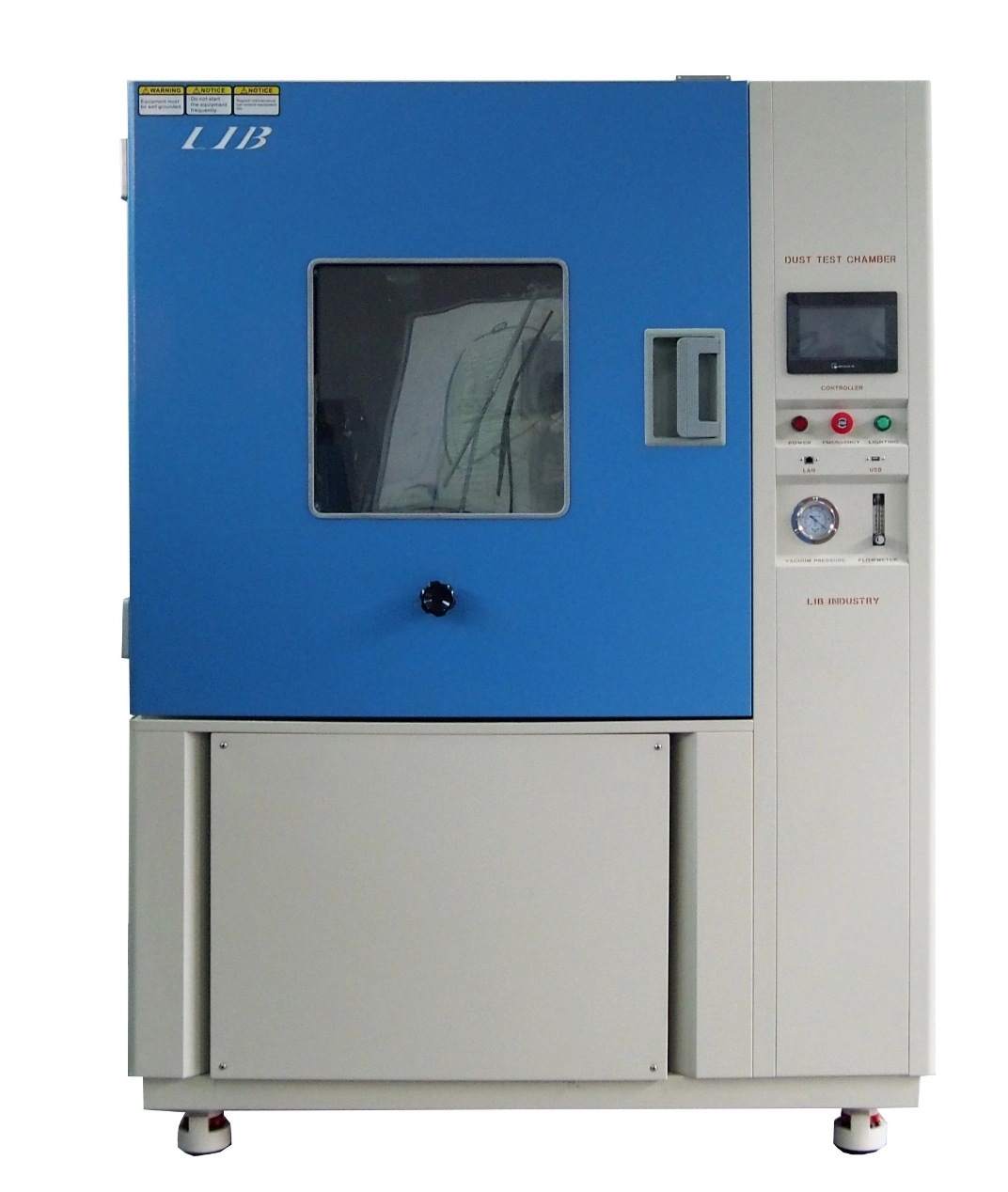
Buying an industrial dust chamber made in China for import can look like a very sensible decision. The choice of model is extensive and the purchase price is more than reasonable. But as with so many products which are purchased without prior research, many a buyer encounters problems that need to be solved with a lot of time and money. Especially for quality managers, procurement managers, test laboratory managers buying such an item it is very important to get it right the first time.
We go through the 5 most common mistakes when buying dustproof test chambers. We describe the mistakes in detail with concrete examples and provide tips on how to avoid them.
A dustproof test chamber is used to check the dust tightness of products such as electronics, automotive parts and outdoor gear. Such a test chamber is also referred to as IP5X or IP6X test chamber. It is used to blow sand and dust into the product and check the seals and the overall performance of the product. Because the standards are becoming more strict and the time to get a product to the market is becoming shorter and shorter, a reliable test chamber is more important than ever. Many first-time importers however learn the hard way.
Buying a dustproof test chamber from China can be a smooth process if you know what to watch out for. Many importers run into the same recurring issues that lead to delays, extra costs, or equipment that underperforms. Below are five of the most common mistakes, along with practical advice on how to avoid them.
Assuming that the internal checks of the factory were sufficient enough to be ok was one of the biggest mistakes. A cracked touch screen and a leaking vacuum system on a unit that was being packed out was discovered by the procurement manager at the port of destination.
It is best to arrange a pre-shipment inspection. This is the last check on the key components on the filters, seals and control panels etc of the machine prior to shipment from China. A Third Party Inspection can verify that all the test runs under actual operating conditions are running correctly prior to your departing China. Cost is a small extra and will undoubtedly be saved off in the long run in re-work and delay of a late arriving machine.
At first glance a fancy website can be quite impressive. However, some suppliers take on too many orders for their workshop to handle. This has led to one buyer waiting for no less than 9 months for his delivery. Meanwhile the factory was playing at setting new deadlines, but in reality was juggling between bigger clients.
You need to check on their background. Ask for a list of recent orders, pictures of their production facilities. Ask for contact of some of their international customers. Check if they are ISO 9001 certified. Ask how many dustproof test chambers they are able to produce per month. A serious business partner is transparent, not just talking big.
Dust levels, airflow quality, and temperature affect test results. Lack of documentation may cause chamber to fail audit.
Smart buyers ask for specific documents. First, a report of dust concentration calibration. Second, temperature uniformity test results. Third, a valid traceable certificate, matching IEC 60529 or ISO specifications.
The situation of an automotive supplier nearly losing a contract due to the dust density readings from their chamber deviating from the required values is depicted below. The supplier had no records to prove that he was at the correct starting point. Good suppliers supply a full documentation package from the very beginning.
There is a tendency to only look at the production time for delivery to a destination by sea. The subsequent parts of the delivery process such as sea freight, customs clearance and local transportation can add weeks or even months.
A realistic timeline for a standard dustproof test chamber might look like this:
Production: 4–6 weeks
Pre-shipment testing and packing: 1 week
Ocean shipping: 4–6 weeks (depending on port)
Customs and delivery: 1–3 weeks
Factor in some extra time for first time orders, the process is not perfect so be prepared for some errors.
First-time importers have a tendency to trust too much. Seeing a simple video of a factory is not enough to uncover any hidden problems such as poor wiring or incorrect parts.
Engaging an independent Chinese Inspector for a full pre shipment inspection gives us great comfort. Not only can they carry out basic functional test for us, they also check safety features of the goods. They provide a full report with lots of pictures and video. For non regular suppliers this gives us great comfort as to the description and quality of goods prior to placing an order.
Dustproof test chambers are designed to test products under stress for one parameter. However, most of the test environments are combined and by complementing dust tests with strong vibration test chambers LIB offers a wide range of combined environmental testing solutions.
Key Advantages:
Integrated Testing Capability: Combines temperature, humidity, and vibration in one unit for realistic multi-stress testing.
Strong Load Handling: Supports up to 500 kg payload with a 240 mm dynamic diameter shaker.
Wide Environmental Range: Temperature from -50°C to +150°C with tight ±0.5°C control.
Fast Temperature Changes: Up to 5°C/min ramp rates for accelerated testing.
User-Friendly Controls: Programmable touchscreen with USB and RS232 connectivity.
Technical Specifications (THV-1000 Model)
| Parameter | Specification |
|---|---|
| Internal Dimension | 1000 × 1000 × 1000 mm |
| Temperature Range | -50°C to +150°C |
| Temperature Fluctuation | ±0.5°C |
| Humidity Range | 30% to 98% RH |
| Humidity Deviation | ±2.5% RH |
| Cooling Rate | 5°C/min |
| Payload Capacity | Up to 500 kg |
| Interior Material | SUS304 stainless steel |
| Power Supply | 380V 50Hz |
LIB vibration chambers offer several advantages for the laboratory conducting the most complex of reliability testing in conjunction with dustproof testing.
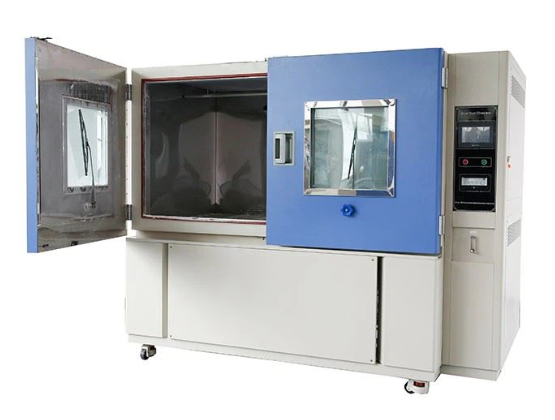
When selecting partners for your production, it is crucial to pick companies who are in full control of their manufacturing processes and who stand behind their equipment. Such companies are able to offer customized solutions, excellent after-sales service and clear communication while producing high quality goods.
Xi’an LIB Environmental Simulation Industry is a reliable provider of environmental test chambers, such as dustproof test chambers, temperature chambers and vibration systems and other environmental simulation test equipment. For years, LIB has been designing and manufacturing both of standard test equipment and special test equipment. All kinds of test equipment provided by LIB can meet the clients’ needs and can be completed with related services, from the beginning of consultation to installation and to the after sales service.
The task of importing a dustproof test chamber does not have to become a risky business. Avoiding the common mistakes of importing when purchasing a dustproof test chamber such as not carrying out inspections, underestimating the required time etc. will help to develop a stronger purchasing process. This will ensure that, after the initial effort, the equipment functions in a reliable manner for years to come and your staff is able to fulfill the required tasks from your industry.
Pay close attention to dust concentration control, build quality of the circulation system, and calibration certificates. These directly impact how accurate and repeatable your tests will be.
Expect 10 to 16 weeks total, including production, inspection, and shipping. Always add buffer time for customs and any unexpected delays.
Yes. Good suppliers can adjust chamber size, add features like temperature control, or modify dust types to match standards for automotive, electronics, or aerospace applications.
It catches issues before the equipment leaves China and reduces the chance of costly surprises after delivery. This step is especially useful when building trust with a new supplier.
Typically a reliable supplier would offer a minimum 3 year warranty, prompt delivery of spare parts and have English speaking technical staff on hand to assist with any problems. In addition, a good supplier would be able to provide training on the test chamber and be able to offer remote troubleshooting assistance when required.




 EN
EN


