

Lead Provider of Environmental Test Chamber


 Posted on
04 06 2026
Posted on
04 06 2026


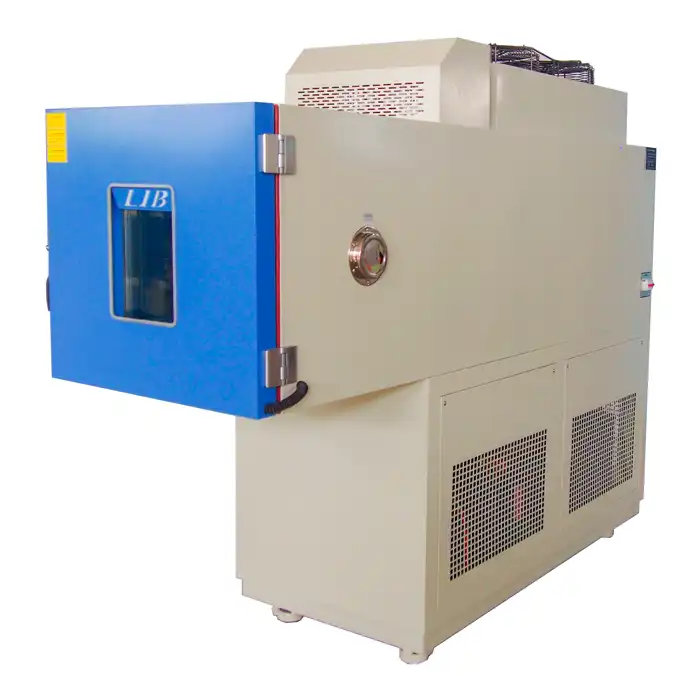 EV battery makers, avionics teams, and automotive suppliers face the same headache when buying test equipment. You spec a vibration test chamber that looks good on paper, only to discover later it can’t handle the actual size or weight of your products. Suddenly you’re facing delays, extra fixtures, or outright failures during qualification. Getting the payload capacity right from the start saves serious money and keeps your validation schedule on track.
Heavy, dense components keep getting bigger. A single EV battery pack can weigh 350 to 500 kg or more. Avionics assemblies and full automotive subsystems push similar limits. If your chamber’s shaker table maxes out too low, you either test smaller sections (which misses system-level behavior) or overload the equipment (which risks inaccurate data and safety issues).
Industry standards keep tightening too. New ANSI/UL and IEC requirements for vibration durability mean labs need equipment that can run combined temperature-humidity-vibration profiles on full-size specimens without compromise.
Market numbers back this up. Demand for vibration testing gear keeps climbing as EV and electronics production ramps. Picking the right capacity now helps future-proof your lab against larger next-gen packs and modules.
Different sectors bring their own challenges when it comes to specimen size and weight.
Battery modules and full packs are heavy and bulky. Testing often involves 300–500+ kg loads. You need enough interior space for the pack plus fixturing, plus a shaker that can deliver consistent force across the frequency range without bottoming out. Combined environmental stress (temp cycling while vibrating) adds another layer of complexity. Safety features for potential thermal events become non-negotiable.
Components here might weigh 200–400 kg but demand precise multi-axis simulation and wide temperature swings. Payload capacity has to cover the unit under test plus any specialized mounting that simulates aircraft installation. Vibration profiles often run across broad frequency bands to mimic flight conditions.
Full assemblies, chassis parts, or powertrain modules frequently hit 300–500 kg. Labs run road-like vibration profiles combined with temperature and humidity to catch fatigue issues early. The chamber needs to handle these loads day after day without performance drop-off.
Motors, pumps, and heavy machinery parts vary widely but often require rugged, high-payload setups for long-duration reliability testing.
Getting any of these wrong means retesting or buying a second system later — an expensive lesson.
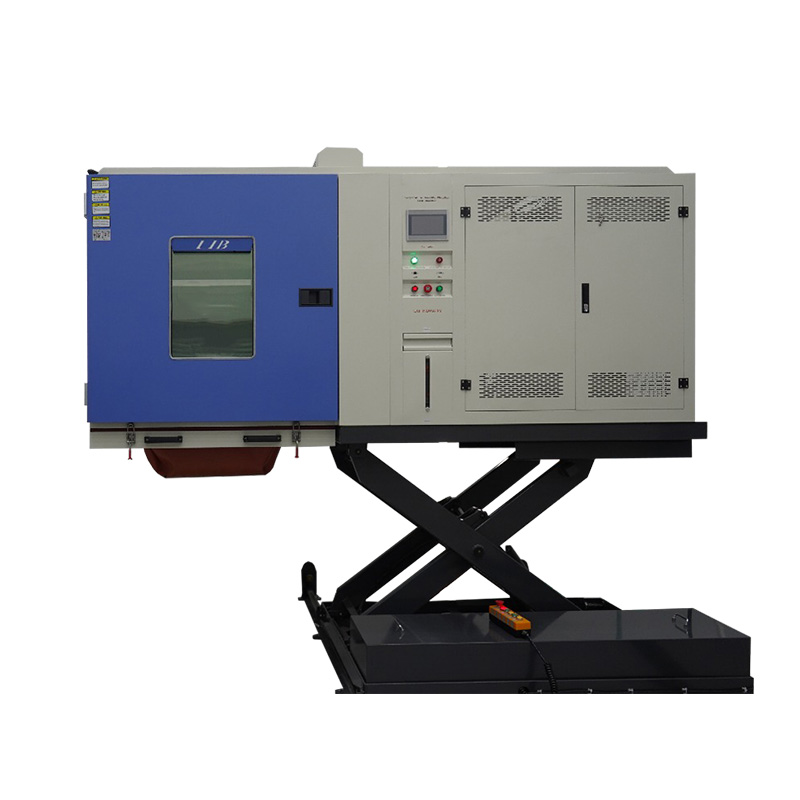
LIB designed its vibration test chamber specifically for these high-load, combined-environment scenarios. The THV-1000 model gives you plenty of room and strength without unnecessary complexity.
Key Advantages
Spacious interior that fits large assemblies comfortably
Strong electrodynamic shaker integration for consistent performance under load
Combined temperature, humidity, and vibration in one unit — cuts down on multiple setups
Solid build quality that holds up in daily lab use
Programmable controls that make custom profiles straightforward
This setup lets teams run realistic tests on full-size products instead of breaking them into smaller pieces.
THV-1000 Vibration Test Chamber
| Parameter | Specification | Why It Matters for Your Testing |
|---|---|---|
| Internal Dimensions | 1000 × 1000 × 1000 mm | Fits full battery modules and avionics assemblies with room for fixturing |
| Payload Capacity | Up to 500 kg | Handles heavy EV packs and automotive subsystems |
| Shaker | Ø240 mm electrodynamic | Delivers reliable force across frequencies even at high loads |
| Temperature Range | -50°C to +150°C (±0.5°C fluctuation) | Covers automotive and aerospace extremes |
| Humidity Range | 30% to 98% RH (±2.5% RH) | Enables combined environmental stress screening |
| Cooling Rate | Up to 5°C/min | Supports fast thermal cycling |
| Controller | Programmable PID touchscreen with RS232/USB | Easy profile editing and data logging |
| Interior Material | SUS304 stainless steel | Corrosion resistance and easy cleaning |
| Safety & Durability | Cable ports, adjustable shelves, protective coatings | Reliable long-term operation |
Optional hydraulic lift platforms let you adjust table height for different test setups. The whole system supports rapid transitions and accurate control even when fully loaded.
A lab testing large lithium-ion battery packs learned this the hard way. They started with a smaller chamber and quickly hit payload limits. Switching to a properly sized system with 500 kg capability let them run full-pack vibration profiles under temperature cycling. Test accuracy improved, and they caught interface issues they previously missed.
In avionics work, teams using adequate payload chambers complete qualification faster because they avoid workarounds like partial assembly testing. Automotive suppliers report fewer field failures when they validate full systems under realistic loads.
The takeaway is simple: Match the chamber to your heaviest expected product plus some headroom. It prevents expensive retrofits and keeps you ready for future designs.
EV adoption and stricter reliability standards keep pushing chamber requirements higher. Combined vibration-temperature-humidity testing has become standard for battery qualification. Labs that invest in capable equipment now avoid playing catch-up later as pack sizes grow and new regulations roll out.
Xi’an LIB Environmental Simulation Industry stands as a trusted environmental test chambers supplier. Since 2009 the company has focused on designing, building, and supporting high-quality simulation equipment for labs around the world. With products shipped to dozens of countries and strong relationships with major manufacturers and testing organizations, LIB delivers practical solutions backed by solid engineering and responsive service.
Choosing the right vibration test chamber comes down to understanding your real payload needs across temperature, humidity, and vibration. From heavy EV battery packs to sensitive avionics, adequate load capacity keeps your testing accurate, efficient, and compliant. The LIB THV-1000 with its 500 kg capability and spacious 1000 mm workspace gives manufacturers the headroom they need today while supporting tomorrow’s larger assemblies. Getting this specification right the first time saves time, money, and headaches down the road.
Many deal with 350–500 kg units. So a chamber set at 500 kg, like the LIB THV-1000, gives a solid extra for full setups plus mounts.
Yes. Blended types join a firm electric shake with broad heat and moisture spans. This lets you perform mixed patterns on big samples. You avoid shifts between devices.
Very key. A 1000 × 1000 × 1000 mm area provides space for actual product forms and right bases. This boosts test truth over tight chambers.
Aim for a shake and platform rated over your heaviest part. Add good frequency span and power output. This ensures steady data in long tests.
Yes. Working within set limits cuts wear on the shake and machine parts. This leads to fewer fix needs and more active time in your lab.




 EN
EN


