

Lead Provider of Environmental Test Chamber


 Posted on
22 05 2026
Posted on
22 05 2026


Corrosion poses a constant problem in materials engineering. It affects product reliability, safety, and overall costs over time. This issue comes from detailed reactions between metals and their nearby surroundings. These reactions cause slow damage that weakens the structure’s strength.
Corrosion mainly happens through electrical-chemical reactions. These involve metal particles, water, air, and harmful substances. When a metal surface touches a liquid like water with mixed salts, positive and negative spots appear. This starts oxidation and reduction actions. Gases such as sulfur dioxide (SO₂) and hydrogen sulfide (H₂S) speed up the process. They create acid layers or sulfide covers that harm the metal. Also, the liquid helps move ions across the metal-liquid boundary. As a result, the damage happens quicker.
The effects of corrosion in industry are wide-ranging. Failures in structures like bridges or pipes can cause major disasters and financial losses. Equipment stops working, which slows down production. Corrosion reduces the strength, electrical flow, and surface quality of materials. In areas like car making, plane building, and power generation, planning ahead for corrosion control is key. It keeps operations safe and cuts down on repair expenses.
Industries use quick corrosion tests to fight failures caused by rust. These methods copy real-life conditions in a lab setup. Now, let’s look at how they help evaluate materials.
Quick corrosion testing gives fast information about how materials act in tough settings. Engineers do not need to wait for years of outdoor results. They can mimic long exposure in just days or weeks. This lets them check paints, metal mixes, and guards easily. It helps pick the best materials for jobs where strength against gases like SO₂ or H₂S matters most.
Experts use several standard ways to check resistance under various stresses.
This test puts samples in a steady salt mist. It checks how well they stand up to salt-based damage, often seen near oceans or on salted roads.
CCT switches between wet, dry, and salt mist stages. It copies changing real conditions better than fixed tests. This method predicts how covers work through shifts in moisture and heat.
This detailed test adds sulfur gases to the room. It matches factory pollution areas with acid makers. The test gives important facts for materials in places like oil plants or hot earth spots.
From basic test ideas, we now turn to special tools. The SO₂ H₂S gas corrosion test chambers work as exact devices to study sulfur damage ways.
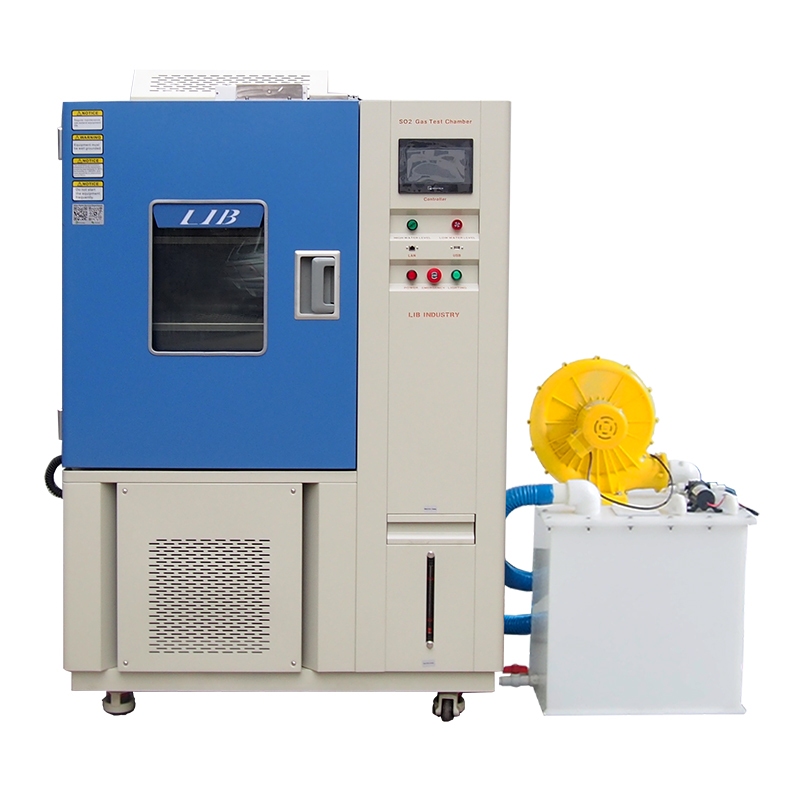
A standard chamber has a gas spread system. It makes sure all samples get even contact. Heat and moisture controls match different air conditions from real use. Safety features handle dangerous gases with filter vents. They protect workers and keep test settings steady.
Good results rely on managing key settings carefully.
Changing levels of SO₂ and H₂S adjusts how strong the harmful air is. Higher amounts make the attack on metal worse. Lower amounts copy light factory contact.
Heat affects how fast reactions go. Warmer conditions speed up air reactions. Moisture keeps the liquid layer needed for electrical processes. It runs without stops. Exact control gives the same results in repeated tests.
Longer times show slow damage types like holes or inner cracks. These happen under changing states of dry air harm and wet layer build-up.
After tests end, experts review the information. They turn it into useful steps for better metal corrosion resistance testing in different fields.
Weight drop checks measure total damage speed. They compare weights before and after tests. Surface shape checks with electron microscopes show local harm like holes or crack growth. These point to weak points. Electrochemical impedance spectroscopy (EIS) checks cover strength. It measures how well they block ion flow through guard layers made in tests.
Reviewing data spots flaws in metal inner structures or guards. These lead to early rust starts. Linking these to mix parts or cover thickness helps improve recipes. This boosts life in sulfur-heavy air like SO₂/H₂S areas. Studies comparing paints, zinc layers, or change films help choose the best guards. They fit needs for things like oil pipes or sea platforms.
Test knowledge helps fields use aimed plans. These extend material life under rust risks from SO2 H2S gas corrosion test chamber checks.
Changing metal mixes is vital. Adding chromium or nickel builds strong self-fix oxide layers. These resist acid harm. Surface changes like anodizing or plasma covers make tight blocks. They limit spots for harmful entry. These changes greatly raise strength without losing load skills needed for heavy use.
After mix improvements, add strong cover systems. Tests confirm their work.
These covers block water and gas from reaching metal bases. They suit okay heat areas with now-and-then pollution shifts.
These show great steady chemistry in hot or acid spots. Organic types might break down fast there.
Mixing layers, like metal bases with plastic tops, builds team defenses. They fight mixed rust types in factory work.
Places with high sulfur gain from steam guards. They stop acid build-up before it hits metal. Also, plan checks from test info set review times. These match expected wear. They cut surprise stops and focus money on stop-ahead fixes, not after-harm repairs.
New ideas keep changing old test ways into smart check tools. They support computer-based material studies.
New chambers add live sensors. They watch gas changes and rust progress as it happens. This gives quick feedback for adjusting tests on the go.
Coming systems will copy mixed air types. These include SO₂–H₂S–NOₓ–CO₂ blends. They match real factory smoke better than one-gas setups.
Computer learning tools use big data from quick tests. They build guess models for material life changes over different settings. This opens new ways in computer rust handling.
The LIB SO₂ H₂S Gas Corrosion Test Chamber is designed to provide precise, reliable, and efficient testing for materials exposed to corrosive sulfur gases. It ensures accurate simulation of real-world industrial conditions, helping engineers and researchers evaluate material performance and optimize corrosion prevention strategies.
Key Advantages:
Multi-Gas Compatibility: Supports SO₂, H₂S, and optionally other gases like CO₂, NO₂ for complex corrosion studies.
Precise Environmental Control: Independent regulation of temperature (+10℃ ~ +90℃), humidity (30%~98% RH), and gas concentrations (1–500 ppm).
Programmable Exposure Cycles: Allows continuous, cyclic, and custom multi-step profiles to simulate real-world conditions.
Safety and Durability: Built with chemical-resistant materials (SUS316), fume extraction, and ventilated systems for operator safety.
Advanced Monitoring: 7-inch touchscreen interface, real-time data logging, remote monitoring via USB/Ethernet, and automated gas regulation.
Flexible Sample Capacity: From small benchtop tests to walk-in chambers for large-scale or multiple sample testing.
Repeatable and Reliable Results: Ensures uniform gas distribution, stable conditions, and high reproducibility across multiple tests.
Technical Specifications Table:
| Parameter | Specification |
|---|---|
| Temperature Range | +10℃ ~ +90℃ |
| Humidity Range | 30% ~ 98% RH |
| Gas Concentration Control | 1–500 ppm for SO₂/H₂S |
| Test Modes | Continuous, cyclic, programmable multi-step |
| Construction Material | SUS316, chemical-resistant |
| Monitoring & Control | 7″ touchscreen, USB/Ethernet, automated logging |
| Sample Capacity | Small benchtop to large walk-in chambers |
| Safety Features | Filtered exhaust, ventilated systems |
LIB’s SO₂ H₂S Gas Corrosion Test Chamber provides a comprehensive solution for accelerated corrosion testing, helping industries—from electronics to oil & gas—to evaluate materials under real-world corrosive environments efficiently and safely.
Xi’an LIB Environmental Simulation Industry is a trusted supplier of SO₂ H₂S gas corrosion test chambers and other advanced environmental simulation equipment. With years of experience in designing precision testing instruments, LIB provides solutions that meet international standards for reliability, safety, and performance. Their chambers help laboratories, research institutions, and industrial clients accurately evaluate material corrosion resistance, optimize protective measures, and extend the lifespan of metals under harsh sulfurous environments.
Using knowledge from set accelerated corrosion testing methods, experts can steadily improve material toughness. This fights strong sulfur air in factory setups worldwide. From oil sites to travel lines, it lengthens use times. It also lowers full costs for fix work.
Unlike conventional salt spray setups focusing solely on chloride-induced deterioration mechanisms, SO2/H2S chambers simulate gaseous pollution effects replicating urban-industrial atmospheres rich in sulfur compounds responsible for acid rain-related damages.
Exposure duration depends upon intended service lifespan simulation objectives; longer durations capture progressive phenomena like pitting evolution whereas shorter tests emphasize initial film breakdown kinetics relevant during early operational phases.
While laboratory simulations provide valuable comparative benchmarks among materials under controlled reproducible settings—they complement but do not entirely replace field trials due to environmental variability influencing actual performance outcomes beyond laboratory constraints.




 EN
EN


