

Lead Provider of Environmental Test Chamber


 Posted on
23 01 2026
Posted on
23 01 2026


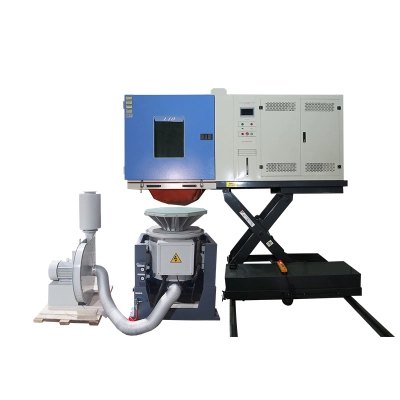
Single-stress testing is clean and repeatable. It is also why many products still fail in the field after “passing” the lab. Road vibration happens while a module is hot. Moisture builds up while a harness is shaking. A coating cracks under vibration and then becomes a moisture path during humidity exposure. Those interactions are exactly what THV testing is designed to surface early, when fixes are still cheap.
High-ranking pages on this topic usually follow the same winning logic. They explain why simultaneous stress matters, connect the method to widely used standards, and spend real time on test setup details such as fixtures, condensation control, and logging. The value is not a definition; it is a practical test plan that can be repeated and defended.
THV testing means applying temperature, humidity, and vibration at the same time in one controlled run. That single change affects the physics at joints, seals, coatings, and contacts. Under vibration, micro-motion opens gaps and rubs surfaces. Under humidity, thin moisture films support corrosion and residue growth. Under temperature swings, materials move across softening and brittle zones. When all three happen together, weak links show themselves fast.
A useful transition is straightforward. Once the meaning of “simultaneous” is clear, the next question becomes practical: what failure modes appear in THV that often stay hidden in single-factor tests?
Many field returns share a pattern: a part works most of the time, then fails under a specific mix of vibration, heat, and moisture. That mix is hard to capture with separate tests.
Electrical intermittency is a classic example. A connector can pass vibration at room temperature, then go unstable in a humid, warm run because fretting and moisture-driven surface change happen together. Another example is sealing performance. A gasket or adhesive can look fine after a humidity soak, then peel or creep when vibration adds cyclic shear at elevated temperature. Coatings and potting compounds have their own trap. Vibration can create micro-cracks. Humidity turns those cracks into diffusion paths. Temperature cycling pumps moisture in and out, stressing interfaces until delamination or leakage shows up.
These mechanisms are common in automotive electronics, outdoor energy equipment, industrial controls, and telecom enclosures. In many programs, THV testing is not about extreme stress. It is about realistic interaction.
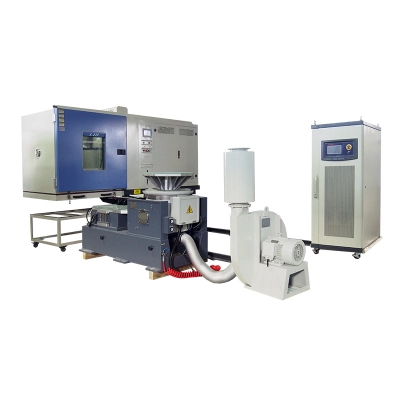
A strong THV plan reads like a lab procedure, not a marketing brochure. It should define what is being tested, what “pass” means, and what evidence will be saved.
An under-hood controller sees heat soak, humidity during cooldown, and road vibration in the same week. An outdoor enclosure sees daily temperature swings, high humidity at night, and wind-driven vibration. That field story drives every setpoint and ramp.
Correlation testing tries to match conditions that the product really sees. Screening pushes weak parts to fail quickly, accepting less field matching. The choice affects ramp rates, dwell times, and vibration severity. It also affects the kind of failures that appear first.
Random vibration is common when the field input is broadband. Sine sweeps are often used to identify resonances, followed by dwells at critical frequencies if that matches the product risk. Many temperature over vibration testing plans also add short vibration bursts at temperature extremes, because some materials are brittle at low temperature and some joints soften at high temperature.
Humidity rules need to be explicit. Many teams intend to run high humidity without uncontrolled condensation, because condensation can turn a humidity test into a water exposure event. A practical plan defines whether condensation is allowed, how it will be detected, and what happens if it persists. Dew-point thinking helps. If surfaces drop below dew point during cooldown, condensation becomes likely. That is not automatically wrong, but it must be controlled and documented.
Instrumentation is the next decision. At minimum, log the climate conditions near the DUT, not only the chamber sensor. Log the vibration control channel and at least one response channel close to where the DUT feels the load. Log product health metrics that match the risk, such as signal dropouts, resets, leakage current drift, or performance timing shifts.
Finally, write pass/fail criteria in numbers. Avoid phrases like “no abnormality.” Use thresholds such as maximum allowed dropouts per hour, contact resistance drift limits, insulation resistance minimums, torque retention targets, or functional performance limits during and after exposure. A test without numeric criteria becomes a debate, not evidence.
The table below clarifies why a temperature humidity vibration test chamber is used instead of three separate tests in many programs.
| Test approach | What it finds well | What it can miss |
|---|---|---|
| Vibration-only | Looseness, resonance issues, fatigue points | Moisture-driven intermittency, seal softening effects |
| Temperature and humidity-only | Material swelling, corrosion tendency, aging response | Vibration-assisted crack growth, fretting behavior |
| THV simultaneous | Coupled failures that match real interaction | Poor fixtures can distort results if not controlled |
Many failed THV tests are true product weaknesses. Some are test artifacts. The difference is usually fixture and wiring discipline.
Fixture stiffness comes first. A flexible fixture can introduce resonance peaks and amplify stress at the DUT beyond the intended profile. Method development should include a low-level check to see how the fixture behaves empty versus loaded. If resonances are sharp and move dramatically with small changes, the structure is too soft or not well supported.
Cable routing is another frequent source of false failure. Cables can fatigue, connectors can pull, and wires can flutter in airflow. The chamber may be perfect and the product may be fine, yet the test fails because a cable broke. A controlled harness plan with stable strain relief and repeatable routing prevents wasted investigations.
Humidity stability under vibration is the third trap. In combined systems, airflow and fixture size affect how humidity reaches the DUT area. During early runs, it is worth placing an independent sensor near the DUT to measure local behavior, then adjusting dwell time so the product truly experiences the planned exposure rather than a short-lived setpoint on the controller.

A THV system is a combination of climate performance, shaker integration, controls, and service support. Selection should start from the test plan and work backward. Temperature range, humidity range, and ramp behavior must remain stable with the DUT and fixture installed. The shaker system must handle realistic payload mass and mounting geometry, because fixture stiffness and payload drive real-world accuracy. Controls and data export matter for repeatability and audits, because program reviews often require raw logs, not summaries.
Xi’an LIB Environmental Simulation Industry presents itself as a manufacturer and exporter of environmental simulation equipment, covering design, production, sales, and service, with international deliveries since 2009 and a distributor network that supports overseas customers. The company positions its offering around standard equipment and custom chamber solutions built to specific testing requirements. For THV projects, buyers typically care about two factors beyond specs: repeatable control under combined load and support that reduces downtime risk for lab schedules. Those priorities are consistent with the way LIB describes its commissioning, support, and after-sales structure.
THV testing is not simply adding three stresses to look tough. It is a controlled way to reproduce the coupled physics that drive many field failures: vibration creating micro-motion, humidity enabling corrosion and diffusion, and temperature swing pushing materials across softening and brittle zones. A temperature humidity vibration test chamber brings those interactions into one repeatable procedure. The best results come from a clear field profile, a standards-informed stress logic, a stiff and instrumented fixture, controlled condensation rules, and complete logs that support root-cause work. When those basics are handled well, THV becomes a practical decision tool that reduces late surprises.
A temperature humidity vibration test chamber is used for simultaneous THV testing, where climate and vibration exposure happen together to reveal coupled failure modes such as intermittency, seal degradation, and coating damage that may not appear in separate tests.
Sequential tests apply stress one at a time. THV testing applies them at the same time, which can trigger interaction-driven failures like fretting plus moisture or seal creep under hot vibration.
The most common mistake is a fixture that is too flexible, creating resonance and unrealistic stress at the DUT. Poor cable routing is another frequent issue that can cause false failures.
Log temperature and humidity or dew point, vibration control and response channels, and product health metrics such as dropouts, resets, leakage current drift, and functional performance changes during and after exposure.




 EN
EN


